
LightDark
Use real customer questions to find missing fit details, clarify policies and build more grounded ad tests for your Shopify clothing store.
A call transcript records the question a shopper asked in their own words. For a Shopify apparel team, that creates a useful research trail: what was unclear, which item caused confusion and what information resolved it. These five approaches turn that material into a repeatable merchandising process.
Start with a small transcript sample from one clothing collection. Capture the customer’s question, the product involved and the information available on its page. Separate a missing measurement from a measurement the shopper could not find. Those are different fixes.
For example, a hypothetical caller asks whether the listed chest width is measured flat. Check the actual chart before changing the page. A clear measurement label and diagram address that issue more directly than adding another general claim about comfort.
Assign a product owner to verify every new measurement. The transcript reveals the gap; it does not supply a trustworthy measurement by itself. Shopify’s sizing guide is a useful reference for distinguishing body and garment dimensions.

Use a simple research sheet with product, question category, missing detail and proposed action. Group questions about length, fabric feel, transparency, care or exchanges. Retain a link to the underlying transcript so a reviewer can check the context.
Count repeated questions within the sample, but avoid presenting that count as the share of all shoppers. Callers are a self-selected group. One serious policy misunderstanding still deserves attention even if it appears only once.
Review the groups with support and merchandising together. A pattern across several products suggests a collection-level explanation; an isolated issue belongs on the relevant product page.
Choose one repeated question and write a direct answer near the purchase decision. State the relevant fact, its scope and any limitation. For a care question, use the garment’s verified care instructions. For an exchange question, link to the current policy and make final-sale exclusions clear.
Keep a dated record of the old page, the change and the person who approved it. Then update the agent’s source material so spoken answers and the storefront agree. Ava records and transcribes calls, and lets you train your agent with documents, text and store URLs.
Do not publish customer names, phone numbers or order details in product copy. Paraphrase the question into a general explanation. Obtain permission before using an identifiable customer quotation as a testimonial.

A transcript can suggest a message worth testing. Suppose shoppers repeatedly ask whether a jacket fits over a sweater. A product demonstration showing the actual layering fit gives your creative team a concrete brief. Verify the demonstration against the product before running the ad.
Write the hypothesis first: explaining this particular fit detail will attract better-informed shoppers. Keep the offer and audience comparable during the test, and judge the result using completed purchases and downstream quality, not comments alone.
Ava gives you downloadable call transcripts so you can review customer questions in their own words. Treat that insight as input to research. A phrase appearing in a call does not prove that it is a winning ad angle.
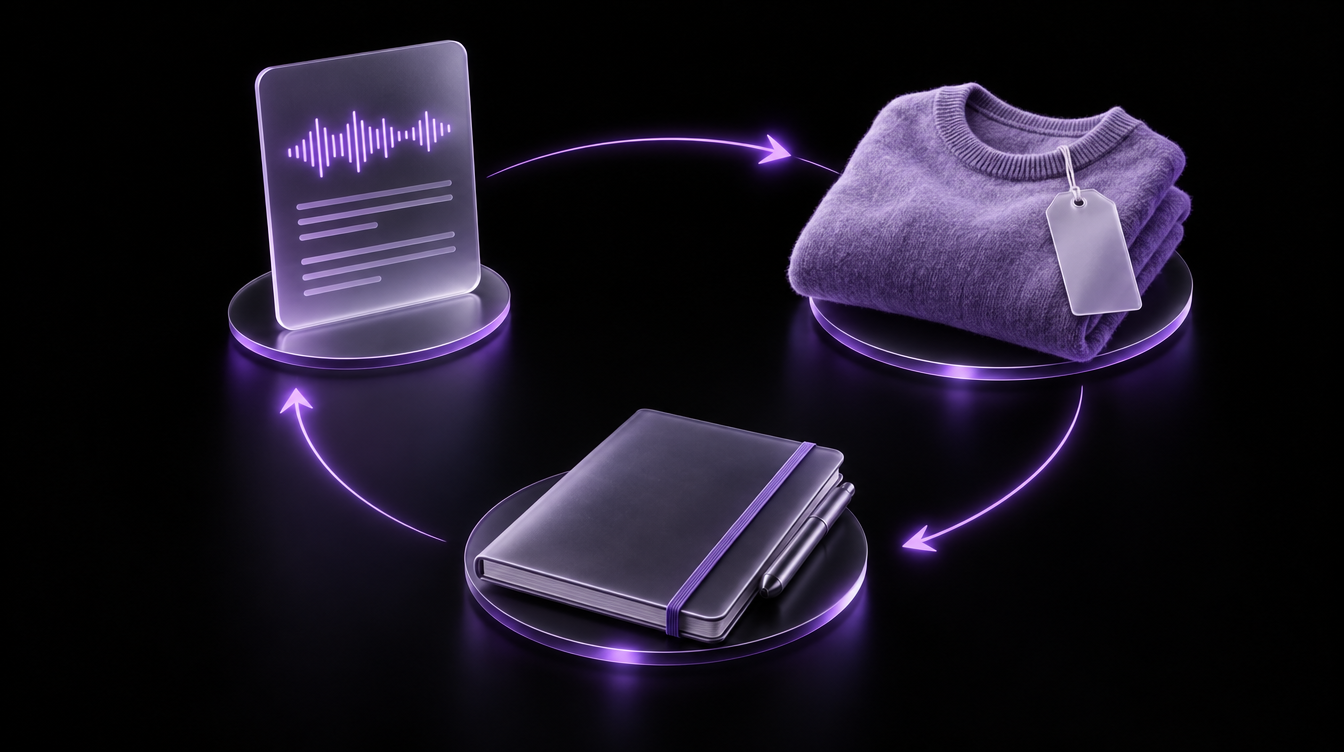
Return to the same question category after enough new conversations have accumulated. Check whether callers still ask it, whether staff must correct an answer and whether the product page is easier to understand. Pair that review with your existing order and return reporting.
Shopify’s category-specific return reasons include apparel choices such as too big and too small. These records offer another signal to review alongside calls. They do not establish that a page edit caused a change in return rate.
Record the period, product mix and other changes, including promotions. Decide to keep, revise or remove the edit based on the combined evidence. That closes the loop from a real question to a checked improvement.
Give one person ownership of the transcript sample and another responsibility for product accuracy. Select one fix each week, preserve its source and review it after release. Begin with a manageable collection instead of rewriting the whole catalog.
There is no universal threshold for this review. Begin with a clearly described sample and avoid broad conclusions from a handful of callers. Verify serious factual gaps as soon as you find them.
A support conversation is not automatic permission for a public endorsement. Use the material for internal research and obtain appropriate permission for identifiable quotations.
Review Ava’s core voice-calling uses, make test calls and check the information your agent can access. Keep research findings separate from measured sales results.
Get set up in minutes.