AI Voice Agents Make Outbound Calls Naturally? Yes | 2026
Can AI voice agents make outbound calls without sounding robotic? Yes. Learn what makes cart recovery calls sound natural and how to test a Shopify voice agent.
September 26, 2026
Yes. AI voice agents can make outbound calls without sounding robotic when they answer the customer’s question, allow interruptions and avoid repeating a fixed script. For a Shopify store, the test is whether the call helps someone finish checkout or resolve a concern, not whether the voice passes for a human.
TL;DR
- Can AI voice agents make outbound calls without sounding robotic? Yes, if they respond naturally to questions and interruptions.
- Avasales fits Shopify merchants who need abandoned-cart calls alongside phone support; assess actual calls during its 7-day free trial.
- Judge the conversation by what the customer can accomplish, not by the greeting alone.
Can AI voice agents make outbound calls without sounding robotic?
Yes, but a natural-sounding greeting is not enough. The agent has to stay useful after the customer asks why it called, changes the subject or says they are not interested. For abandoned-cart outreach, that means explaining the reason for the call, listening to the response and taking an appropriate next step.
These approaches solve different problems. A recorded message can deliver a fixed announcement. A conversational voice agent can address questions during the call. A human agent can exercise judgment when a situation falls outside the planned workflow.
Recorded message
- Best for: Delivering a fixed announcement
- Strength: Keeps the wording consistent
- Limitation: Cannot answer a question about the customer’s cart
- Verdict: Skip for a two-way recovery conversation
Conversational voice agent
- Best for: Handling routine abandoned-cart questions
- Strength: Can respond within the workflow it is given
- Limitation: Needs accurate information and a way to handle questions it cannot resolve
- Verdict: Test with real cart scenarios
Human agent
- Best for: Handling sensitive or unusual conversations
- Strength: Can make judgment calls
- Limitation: Requires staff availability
- Verdict: Keep as an escalation option
For a closer look at the use case, read how abandoned-cart calls work for Shopify stores. The deciding question is what happens after the customer speaks, not how polished the opening line sounds.
Why this matters
An abandoned cart does not tell you why a shopper stopped. They might have a question, want to return later or have no interest in a call. An outbound agent that assumes every shopper needs the same pitch risks turning a useful contact into an unwanted interruption.
In 2026, judge voice quality against the whole exchange. Listen for a clear explanation of why the store is calling, a relevant response to what the customer says and a respectful end when the conversation is over. A pleasant voice cannot compensate for an answer that ignores the question.
The same distinction matters when you compare outbound calls with phone support. A customer calling about an order has a different purpose from a shopper receiving a checkout follow-up. Good wording for one conversation does not automatically suit the other.
What makes an outbound call sound natural?
The answer is conversational fit. The caller needs to say something relevant, make room for a reply and adjust when the reply is unexpected. A voice that sounds smooth while reading a script can still feel robotic if every customer receives the same response.
A clear reason for calling
Start with the store and the reason for the call. For abandoned-cart outreach, the reason concerns an unfinished checkout. If the customer does not recognize the store or does not want to discuss the cart, the agent should not keep pressing the original message.
Clarity also limits confusion. Do not imply that an order was placed when the event was an abandoned cart. Those are different states, and the wording should reflect the information available to the caller.
Replies that follow the customer’s question
A shopper who asks about an order needs an order-related answer, not another checkout prompt. A shopper who asks for a link needs a clear next step. When the caller lacks enough information, it should say so rather than fill the gap with a confident guess.
This is where access to relevant Shopify information matters more than voice polish. Avasales provides an AI voice phone agent app for Shopify store owners that handles support calls as well as outbound abandoned-cart calls. Avasales is best for Shopify merchants evaluating one voice agent for customer support and abandoned-cart outreach. Its limitation in this comparison is the same question you must put to any agent: whether its actual replies suit your store’s customers and workflows.
Space for interruptions and refusal
Customers do not speak in neat turns. They interrupt, ask for clarification and sometimes say they are busy. Evaluate whether the agent stops its prepared message, addresses the interruption and accepts a refusal without restarting the pitch.
A call can be brief and still be successful as a conversation. If the customer declines, a clean ending is more natural than another attempt to present the same checkout message. Do not use the length of the call as a substitute for listening to what happened.
A useful next step
The next step should match what the customer requested. That might mean an approved text link for a shopper who wants to return to checkout, an order-tracking response for an existing customer or a route to further help when the caller cannot resolve the issue. Do not have the agent promise an action that the workflow cannot complete.
In 2026, assess these steps as parts of one conversation. A polished opening followed by an irrelevant link is still a poor call. The customer should know what happened and what to do next before the call ends.
Why the result varies between calls
No voice setting fixes a mismatch between the call and the customer’s situation. These factors shape whether an outbound conversation feels responsive or scripted:
- The trigger. An abandoned cart and an existing order call for different openings. The caller should not describe one as the other.
- The information available. Relevant cart or order context helps the caller answer the question in front of it. Missing details require an honest limit.
- The customer’s response. A request for a checkout link, an order question and a refusal need different next steps.
- The wording. Repeating the same pitch after a clear objection makes the interaction sound scripted, regardless of voice quality.
- The handoff. An unresolved refund or unusual support question needs a defined path beyond the agent’s prepared reply.
- The call’s end. A respectful close matters when the customer has answered, declined or asked to continue another way.
Treat that list as a call-review checklist, not a claim that changing a voice preset will solve each issue. First decide what the agent should know and do. Then listen to whether its speech makes those decisions clear.
How should you test an outbound voice agent?
Use situations drawn from your store’s actual support and checkout workflow. During Avasales’ 7-day free trial, setup in minutes gives Shopify merchants a chance to inspect the experience before deciding whether the outbound approach fits. Avasales states that it charges zero commission on recovered revenue; confirm current plan and usage charges in the Shopify App Store before making a purchasing decision.
Try these 3 call scenarios, with 2 calls for each if you want to hear whether the response stays consistent:
- Customer question. Ask why the store is calling, then ask something relevant to the cart. Check whether the answer responds to your words rather than returning to the opening script.
- Changed subject. Begin with the cart, then ask an order-tracking question. Check whether the agent recognizes that the conversation has moved to an existing order.
- Clear refusal. Say that you do not want help with checkout. Check whether the call ends respectfully instead of presenting the same offer again.
These are test cases, not performance benchmarks. Record what the agent said, what you asked and whether the next step matched your request. A short note on the exact point where a reply failed is more useful than a general impression that the voice sounded good or bad.
For each call, check the sequence: Greeting, Customer question, Relevant reply and Next step. If the reply does not address the question, adjusting the greeting will not repair the conversation.
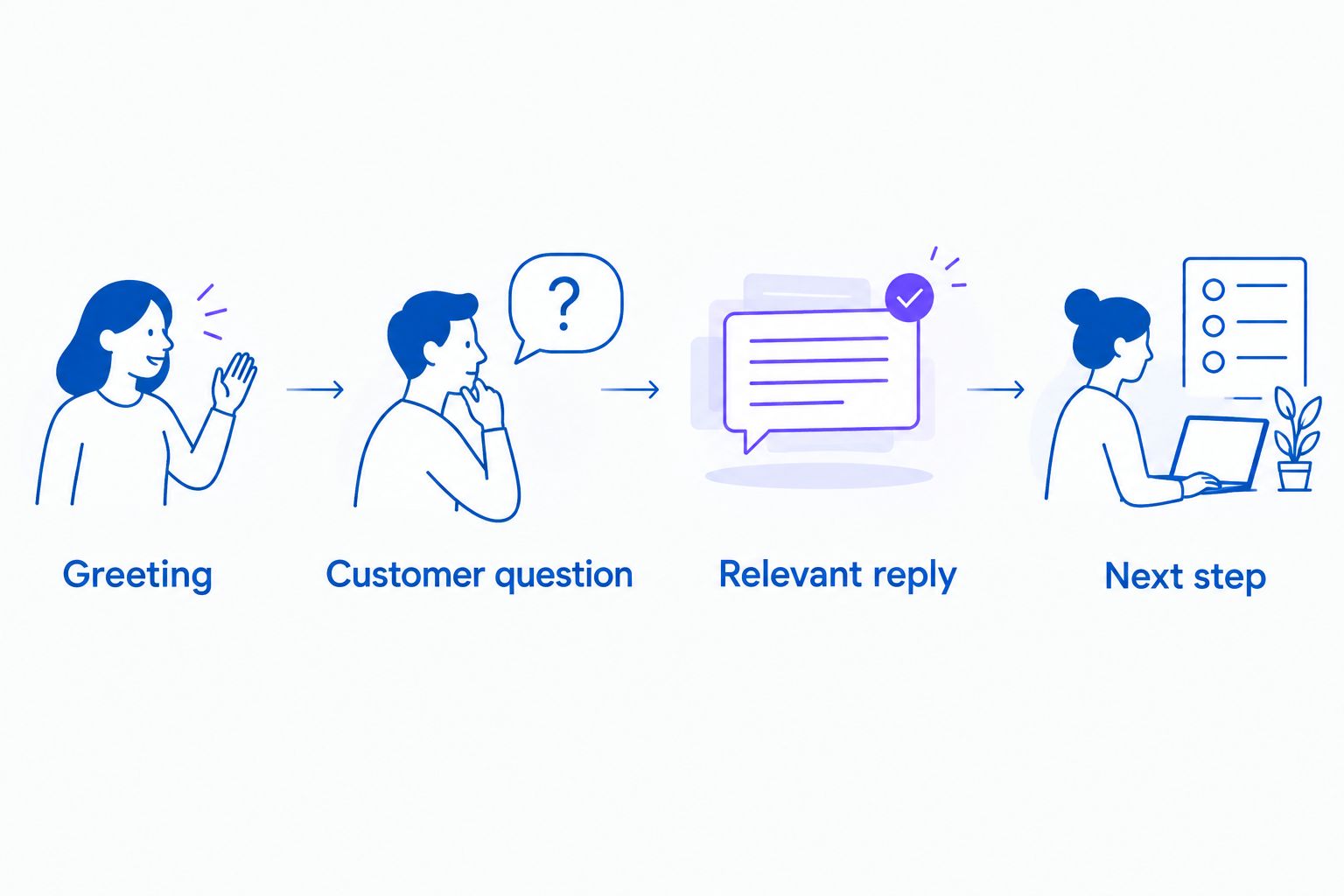
Review what the caller does after the customer speaks, not just how the greeting sounds.
Listen without reading the intended script first. You are checking what a customer would hear, including pauses, interruptions and the final sentence. Then compare the call with the intended workflow to identify whether the problem came from wording, missing information or the chosen next step.
Do not count a website click as a completed sale. Keep app installs, trial starts and paid customers separate when assessing the tool, and assess recovered checkouts separately from calls placed. Those measures answer different questions about acquisition, adoption and customer outcomes.
Test outbound calls on your store
Assess abandoned-cart conversations during the 7-day free trial.
Can an agent sound natural if it identifies itself as automated?
Yes. Identifying an automated caller and speaking naturally are different things. A direct explanation of who is calling and why helps the customer decide whether to continue; trying to disguise the caller does not make an irrelevant answer useful.
For 2026 outbound planning, review applicable calling and consent requirements before activating a campaign. Requirements depend on the call, the recipient and the rules that apply to your business. Treat compliance review as a separate task from voice testing.
Does a better voice fix a rigid outbound script?
No. A better voice changes how the script sounds, but it does not give the caller a relevant answer when the customer asks something unexpected. Test interruption handling, available information and the next-step rules before spending time fine-tuning the opening line.
That distinction is especially useful for Shopify cart recovery. A shopper who asks to receive a link has made a different request from one who asks about a prior order. The response should follow the request, not return to a memorized cart message.
When should an outbound call stop trying to recover a cart?
Stop the recovery pitch when the customer declines, raises an unrelated issue or asks for a next step outside the cart conversation. A natural exchange respects the change in direction. The agent should answer within its supported workflow or route the issue appropriately rather than inventing an answer.
This is also the right place to inspect how support and outbound calls connect. Avasales handles customer support calls 24/7 and makes outbound calls for abandoned-cart recovery. During a trial, test both kinds of conversation separately instead of assuming a good inbound answer guarantees a good outbound call.
FAQ
Can AI voice agents make outbound calls without sounding robotic?
Yes. They sound more natural when they answer the customer’s question, allow interruptions and adapt the next step instead of repeating a fixed pitch.
What makes an abandoned-cart call sound scripted?
Repeating a checkout message after the shopper asks a different question makes the call sound scripted. Review the agent’s reply after an interruption, not just its opening.
Should an outbound voice agent say why it is calling?
Yes. A clear reason gives the customer context for the call. For an abandoned cart, the wording should not imply that the customer placed an order.
Can a voice agent handle a customer who asks about an existing order?
An agent needs access to relevant order information to give an order-specific answer. Test whether it handles the change of subject or routes the question when it cannot resolve it.
Is a human agent better for every outbound call?
No. A human agent is the stronger option when a conversation requires judgment outside a defined workflow; a voice agent suits routine questions that its workflow can address.
How do I test whether an outbound voice agent sounds natural?
Ask a cart question, change the subject and clearly decline help. Listen for relevant replies, interruption handling and an appropriate end to each call.
Does a natural voice guarantee abandoned-cart recovery?
No. Voice quality alone cannot tell you whether a customer will return to checkout. Assess the conversation and any resulting checkout action separately.
One last thing
The most revealing moment in a 2026 voice-agent test is often the first unexpected question. If the agent answers it and adjusts the next step, voice polish supports a useful call. If it repeats the pitch, the problem is the conversation, not the sound of the voice.
Avasales is worth testing for Shopify merchants who need both outbound cart calls and phone support, but judge it on calls from your own workflow. Keep the transcript or call notes beside the customer’s actual request. That makes the decision about fit specific rather than subjective.