How long does it take an AI voice agent to sound natural?
How long does it take an AI voice agent to sound natural? Judge call quality, not elapsed days. Test Shopify answers, interruptions, and completed actions.
October 4, 2026

An AI voice agent does not need a fixed waiting period to sound natural; judge it from its first test call, then correct the specific problems you hear. A convincing voice is only part of the answer: the agent must also handle interruptions, answer the actual question, and give an accurate next step. Setup time and readiness for customer calls are separate decisions.
TL;DR
- How long does it take an AI voice agent to sound natural? Use call tests, not a calendar deadline.
- Avasales offers a 7-day free trial, setup in minutes, and zero commission on recovered revenue.
- For Shopify phone support, test order tracking, interruptions, refunds, and checkout recovery before expanding coverage.
- A smooth greeting does not establish that an agent can resolve a customer’s request.
How long does it take an AI voice agent to sound natural?
Use a successful conversation as your readiness threshold, not an elapsed number of days. In 2026, a useful evaluation separates voice quality, conversation handling, and store-specific accuracy. Passing one of those checks does not establish that the others work.
Avasales offers a 7-day free trial and setup in minutes, with zero commission on recovered revenue. Treat that trial as an opportunity to assess actual Shopify conversations rather than assume that quick setup proves natural speech.
The following checks separate a pleasant demo from a useful customer call. Each check has a strength and a limitation, so none should stand alone.
Voice sample
- Best for: Checking pronunciation and speaking style
- What a pass establishes: The spoken delivery suits your store
- What it does not establish: The agent can handle an unscripted exchange
Scripted test call
- Best for: Checking a known support request
- What a pass establishes: The expected answer and next step work
- What it does not establish: The agent handles corrections or interruptions
Unscripted test call
- Best for: Checking conversational recovery
- What a pass establishes: The agent follows changes in the request
- What it does not establish: Every store policy or order action is correct
Completed workflow
- Best for: Checking operational readiness
- What a pass establishes: The requested action matches the stated outcome
- What it does not establish: Every other workflow is ready for customers
You do not need to approve all call types together. Approve a workflow when its voice, answers, and actions meet your requirements, and keep unresolved workflows out of customer use.
Why this matters
For a Shopify merchant, natural speech has a practical purpose: helping a caller get an answer without working around the agent. A polished voice that repeats irrelevant information still leaves the customer with an unresolved problem. Evaluate the whole exchange, including what happens after the customer corrects a detail.
Consider an order-tracking call. The agent needs to understand which order the customer means, explain the available status clearly, and distinguish that status from an unsupported delivery promise. Correct pronunciation cannot compensate for an incorrect answer.
Your 2026 acceptance standard should cover both the conversation and the outcome. A customer who hears a confident answer must receive information your store can stand behind.
Voice quality: test the first spoken response
Start with the greeting, but continue into the actual support answer. Listen for clear pronunciation, understandable pacing, and wording that sounds appropriate when spoken aloud. Store names, product names, and order identifiers deserve separate attention because they appear inside otherwise ordinary sentences.
Give the agent a realistic question rather than asking it to demonstrate its voice. An order-status request exposes how it connects the greeting to useful information. A generic welcome only exposes the welcome.
The advantage of a voice sample is speed: you can reject an unsuitable speaking style without completing a full workflow. Its limitation is scope. It tells you little about how the agent responds when a caller changes direction.
Avoid treating a preferred accent or expressive delivery as proof of accuracy. Those are presentation choices. Your acceptance decision should also depend on whether the customer can understand the answer and act on it.
Conversation handling: test interruptions and corrections
A natural conversation requires the agent to follow the caller’s meaning as it changes. Test a correction to an order number, an interruption during an explanation, and a follow-up question that depends on the previous answer. These are evaluation scenarios, not a claim that every agent handles them correctly.
Listen for unnecessary restarts. If the caller corrects one detail, the next response should address that correction without replaying unrelated information. If the caller asks a follow-up, the answer should fit the question already under discussion.
Also test silence and uncertainty. Ask a question that requires clarification, then pause before answering. Assess whether the agent requests the missing detail clearly rather than filling the space with unsupported information.
Approve conversation handling only after the agent can recover from a changed request. A fluent response to a prepared question is useful evidence, but it is not enough to approve unscripted calls.
Store accuracy: test the answer and the action
A voice agent sounds more credible when it explains the right information plainly. For Shopify support, evaluate the order details, policy explanation, and action separately. A correct order lookup does not automatically establish that a refund decision is correct.
Use your store’s approved policies as the reference for each test. When a customer asks for an exception, check whether the agent stays within the permitted action and communicates any unresolved step accurately. Do not approve language that announces an action before that action has happened.
The Shopify order data to real-time phone answers workflow is a relevant companion when you assess how store information becomes a spoken answer. Keep the source information and the customer-facing explanation aligned.
For your 2026 rollout, write down what counts as a completed request. An answered call, an explained policy, and a processed refund are different outcomes. Record the outcome that actually occurred rather than treating them as interchangeable.
Why the time to sound natural varies
The useful question is which part of the conversation still needs correction. These factors belong in your evaluation because they correspond to observable call behavior:
- Pronunciation: Check whether store terminology and order details remain understandable inside a full sentence.
- Response pacing: Listen for pauses, rushed explanations, and speaking over the caller rather than imposing an unsupported timing target.
- Interruptions: Test whether the agent follows a correction without continuing an answer the customer no longer needs.
- Store information: Verify that the spoken response reflects the relevant order details and approved policy.
- Workflow scope: Test order tracking, refunds, and abandoned-cart calls separately because each requires a different outcome.
- Unresolved requests: Require an accurate explanation of what remains open instead of a claim that the issue is finished.
Fix the observed failure, then repeat the affected test. Changing the speaking style will not correct inaccurate order information. Editing an answer will not establish that the associated action succeeds.
Keep a short record of the request, the problem, the change, and the retest result. That gives you a practical approval history without inventing a universal training period.
How to test natural speech before customer calls
Use the 7-day free trial as a defined evaluation window, not as a promise that every workflow will be ready within it. Your 2026 test plan should begin with the calls you intend to enable and the outcomes you will accept.
- Choose the request. Select a real support task, such as finding an order status or explaining your refund policy. Specify what a correct answer must contain.
- Check the answer. Compare the spoken response with the relevant store information. Flag unsupported promises, missing qualifications, and unnecessary detail.
- Change the request. Interrupt, correct a detail, or ask a follow-up. Check whether the agent follows the revised request without losing useful context.
- Verify the outcome. Confirm whether the requested action occurred or remains unresolved. The closing statement must describe that result accurately.
These steps test a complete exchange rather than a voice in isolation. Keep your acceptance notes specific enough that someone else can repeat the same scenario and understand why it passed or failed.
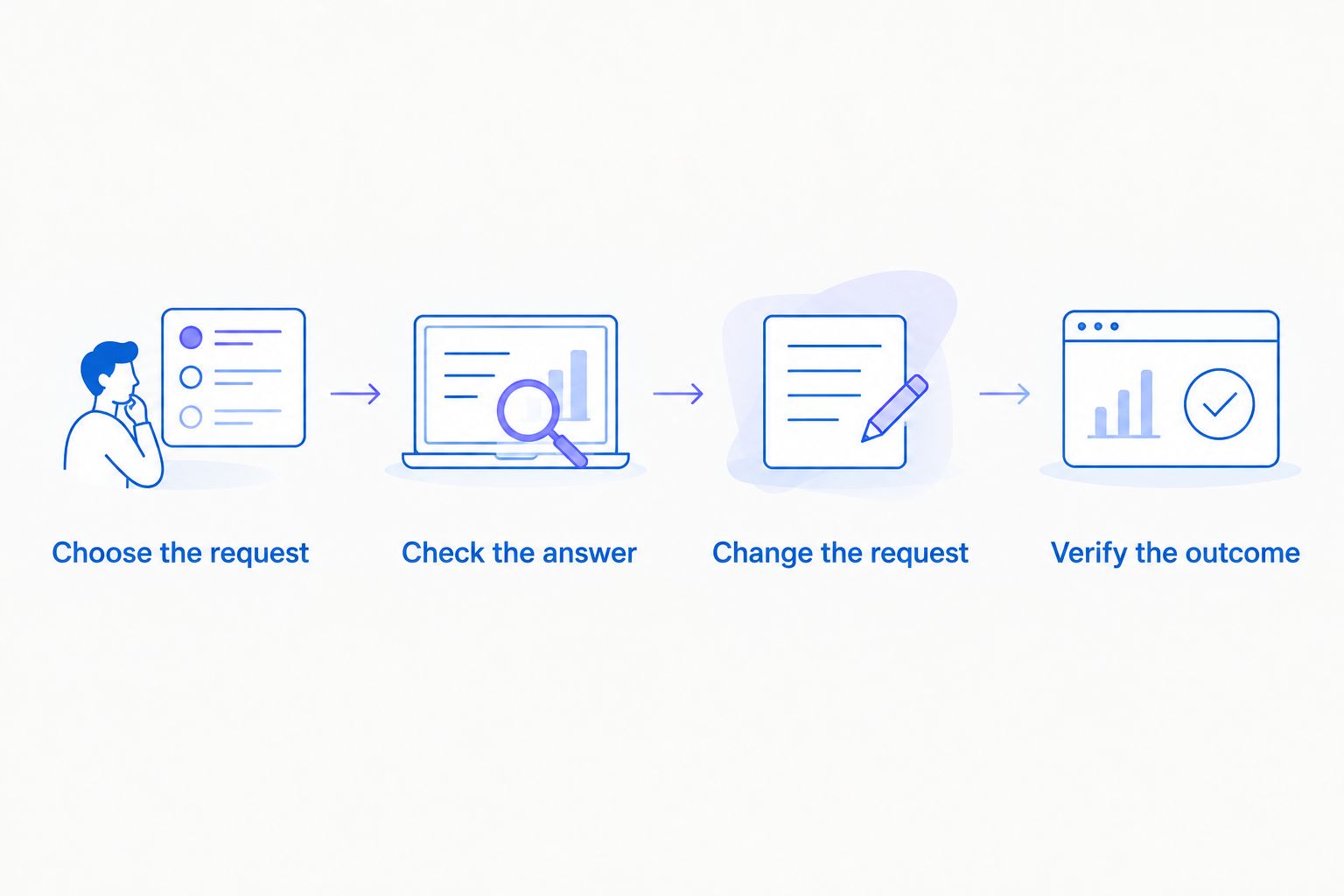
Approve the full conversation, including whether the stated outcome actually occurred.
After a failed test, change only the relevant configuration or instruction before repeating it. Keep a previously successful scenario in the retest as well, so your approval rests on both the corrected case and the existing workflow.
Where Avasales fits for Shopify merchants
Avasales is best for Shopify merchants who need phone support and outbound abandoned-cart calls in one app. Its Ava AI app answers customer support calls 24 hours a day, 7 days a week, resolves orders and refunds, and makes outbound calls to recover abandoned carts.
Those functions give you concrete workflows to evaluate. For inbound support, inspect the answer and resolution. For outbound checkout recovery, assess whether the call explains its purpose clearly and responds to the customer’s actual concern.
The benefit is having support and recovery calling within the app’s stated scope. The limitation is that this scope does not establish a universal natural-speech timeline or a guaranteed result for your store. Setup in minutes describes setup, not the acceptance outcome of every conversation test.
Use the trial to evaluate your own requirements before committing to broader coverage. Check current plan details and usage charges in the Shopify App Store as part of that decision; the trial offer and zero commission on recovered revenue do not describe every usage charge.
Evaluate your Shopify phone workflows
Start with a 7-day free trial, setup in minutes, and zero commission on recovered revenue.
Does setup in minutes mean the agent is ready immediately?
Setup in minutes describes installation and configuration, not a guarantee that every customer conversation is ready. Test the workflows you plan to enable before treating setup completion as launch approval. Keep the setup milestone separate from the call-quality milestone.
Does an agent improve simply by taking more calls?
More calls alone are not evidence that a specific problem has been corrected. Require a repeatable test showing that the pronunciation, answer, or action now meets your requirements. Do not use elapsed time as a substitute for that check.
Should support and abandoned-cart calls use the same test?
Support and abandoned-cart calls need separate outcome checks. A support call must address the customer’s request, while a recovery call must explain its purpose and respond appropriately to the checkout concern. Apply the same clarity standards, but assess the result for each workflow separately.
FAQ
How long does it take an AI voice agent to sound natural?
There is no fixed waiting period that establishes natural speech. Assess the first test call, correct specific failures, and approve the workflow only after its conversation and outcome meet your requirements.
Can an AI voice agent sound natural on its first call?
Judge naturalness on the first call rather than assuming it requires a waiting period. A clear first response still needs follow-up tests for interruptions, accurate answers, and completed actions.
How long is the Avasales free trial?
Avasales offers a 7-day free trial, setup in minutes, and zero commission on recovered revenue. Use the trial to test your Shopify call workflows rather than treat its duration as a guaranteed readiness deadline.
What should I listen for when testing a Shopify voice agent?
Listen for understandable pronunciation, appropriate pacing, and responses that follow the caller’s request. Check the order information and final action as well, because a fluent voice does not establish a correct resolution.
Does changing the voice fix robotic conversations?
Changing the voice does not establish that conversation problems are fixed. Retest interruptions, repeated explanations, and follow-up questions separately from the speaking style.
Should I test refund calls differently from order-tracking calls?
Yes, refund calls and order-tracking calls require different outcome checks. Verify the relevant policy and permitted action for refunds, and verify the order information and explanation for tracking.
What is the best sign that a voice agent is ready for customers?
A repeatable successful workflow is stronger evidence than a polished greeting. The agent should understand the request, provide accurate information, handle corrections, and describe the actual outcome.
One last thing
For your final 2026 acceptance call, change the request after the agent has begun answering. Correct an order detail or ask a question that alters the next step. This tests whether the conversation follows the customer rather than merely finishing a prepared response.
Approve the corrected exchange, not just the opening line. That is a more useful launch decision than choosing a deadline for when the voice should sound natural.