Can an AI phone agent call customers back after a missed call?
AI phone agent call back missed call: yes, with the right trigger. Check callback permissions, Shopify order context, and escalation before you launch.
November 4, 2026
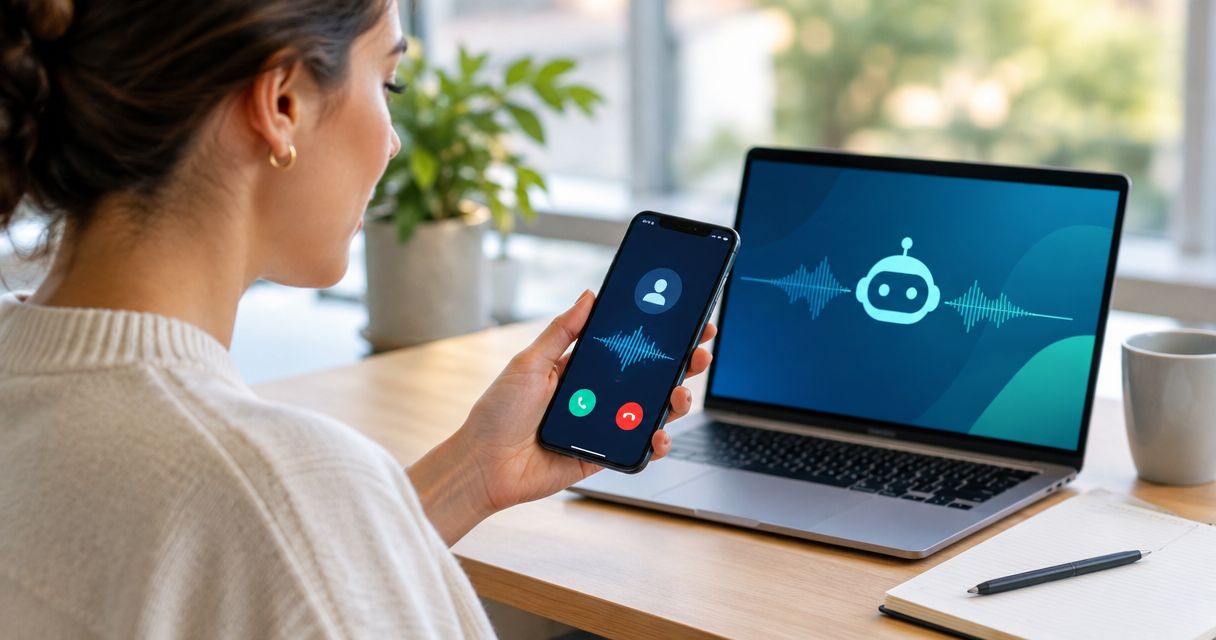
Yes, an AI phone agent can call customers back after a missed call when the phone system detects the missed call and triggers an authorized outbound call. In 2026, you should verify that exact workflow before choosing a provider: outbound calling alone does not establish automatic missed-call callbacks, and the callback still needs identity checks, calling permissions, and a clear support purpose.
TL;DR
- An AI phone agent can return missed calls when the system connects missed-call events to outbound calling.
- Verify callback triggers separately from inbound phone support and abandoned-cart recovery.
- Avasales fits Shopify phone support and abandoned-cart recovery; confirm missed-call callback behavior before enabling it.
- Test identity verification, duplicate suppression, and human escalation before routing customer callbacks automatically.
For Shopify merchants evaluating phone support, Avasales offers a 7-day free trial, setup in minutes, and zero commission on recovered revenue. Use the trial to test your actual support workflow, not just how the voice sounds.
Why this matters
A missed call tells you someone tried to reach your store. It does not tell you whether the caller needs tracking information, wants a refund, or has already solved the problem through another channel.
Your callback workflow needs that distinction. Returning a call without checking the current support status risks restarting a resolved conversation or contacting someone who no longer needs help.
For your 2026 phone-support evaluation, separate answering coverage from callback recovery. An agent that answers incoming calls addresses a different requirement from a system that detects an unanswered call and initiates a new conversation.
Can an AI phone agent call customers back after a missed call?
Yes, provided the missed-call event reaches a system that can place the return call under your approved rules. Evaluate the complete sequence below rather than accepting an outbound-calling feature as proof.
- Detect the event. Identify which incoming calls count as missed, including unanswered calls, failed transfers, and callers who disconnect while waiting.
- Check eligibility. Confirm that the number is callable, the contact is permitted, and the customer has not already received help.
- Retrieve context. Attach the original call details and any verified support information available to the agent.
- Place the callback. Identify the store, explain why the agent is calling, and establish whether the customer still wants assistance.
- Resolve or escalate. Answer within approved permissions or pass the unresolved request to a person.
- Record the outcome. Distinguish an attempted callback from a connected conversation and a resolved support issue.
These are evaluation requirements, not a claim that every phone agent includes them. Ask the provider to demonstrate the sequence using your store's routing configuration.
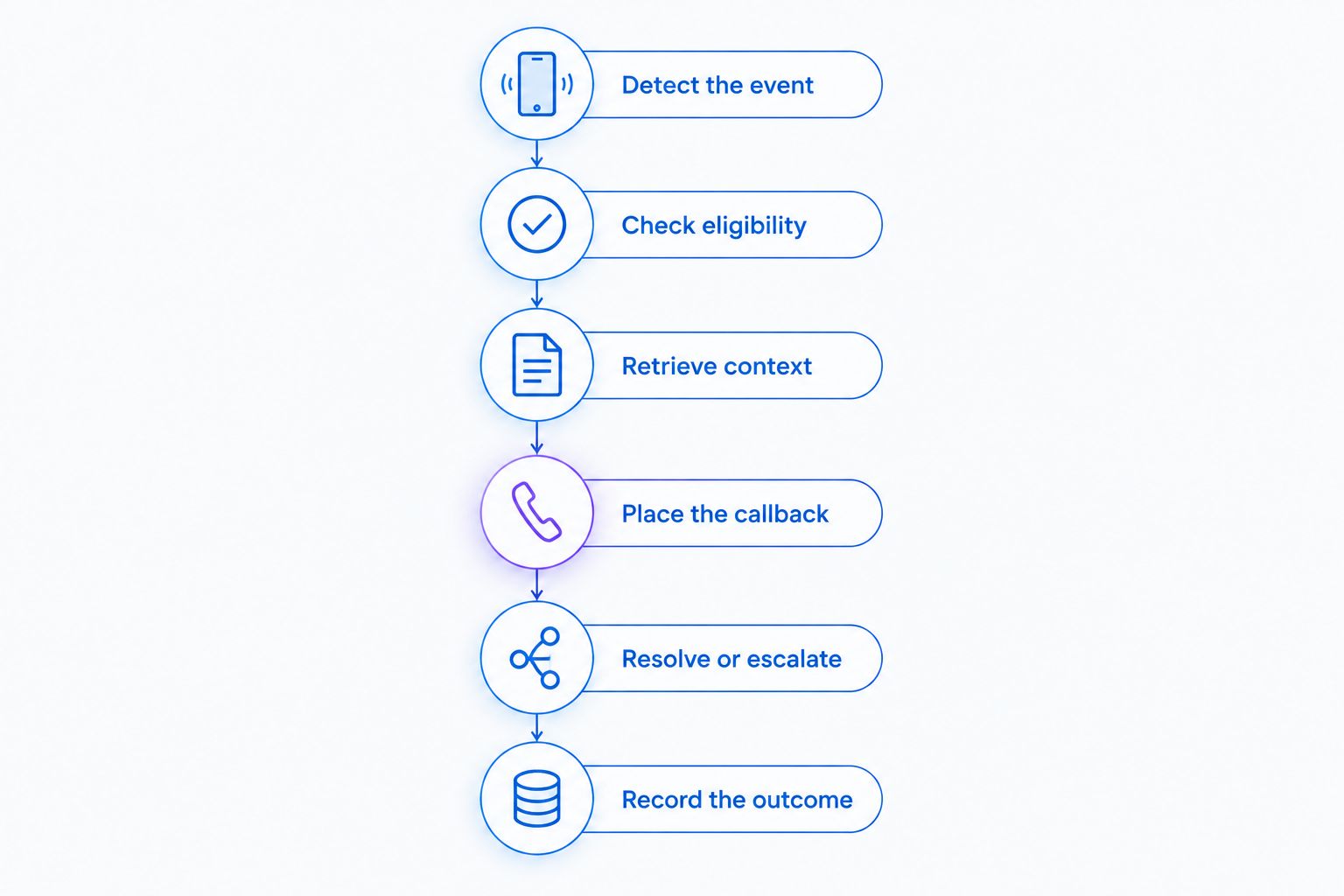
A callback needs an eligible trigger and a recorded outcome, not just an outbound dialer.
Which callback approach fits your store?
Choose the approach based on the work you need completed. Preventing a missed call, returning it, and recovering an abandoned checkout are separate workflows.
Inbound answering
- Best for: Helping callers when they first ring
- Main advantage: Addresses the request during the original contact
- Main limitation: Does not by itself establish callback functionality
Automatic callback
- Best for: Returning eligible unanswered calls
- Main advantage: Connects a missed-call event to follow-up
- Main limitation: Requires trigger, permission, and duplicate-contact rules
Staff callback queue
- Best for: Reviewing sensitive or unclear requests
- Main advantage: Keeps a person responsible for exceptions
- Main limitation: Requires staff availability and queue management
Abandoned-cart calling
- Best for: Following up on an incomplete checkout
- Main advantage: Gives the conversation a checkout-specific purpose
- Main limitation: Does not establish that a support call was missed
Use inbound answering for live requests, callbacks for unanswered requests, and cart recovery for checkout follow-up. Do not merge these categories when evaluating features or reporting outcomes.
A customer who called about a delayed order should not enter a checkout-recovery conversation simply because the store also uses outbound sales calls. Keep the original support purpose attached to the callback.
What should an automatic callback say?
Start with the store's identity and the reason for contact. Ask whether the customer still needs help before requesting order details or discussing a transaction.
The opening should establish the connection to the customer's earlier call without disclosing private information. Avoid naming purchased items, refund details, or delivery addresses before verifying who answered.
Give the agent clear boundaries for the conversation:
- Explain that the call follows an earlier attempt to reach support.
- Identify the automated agent clearly.
- Ask whether now is a suitable time to continue.
- Verify identity before accessing or changing order information.
- Offer a defined next step when the request exceeds the agent's authority.
Write these as operational instructions rather than a long script the agent must recite regardless of the customer's response. The callback should remain relevant if the customer has already received an email reply or found the tracking information.
Why missed-call callback behavior varies
Callback behavior depends on the connection between your phone routing, customer context, and outbound workflow. Use these factors to structure your 2026 provider demonstration:
- Call classification: A caller hanging up, an unanswered ring, and a failed transfer need distinct handling rules.
- Contact purpose: A support callback and an abandoned-cart call need different conversation instructions and permission checks.
- Available context: A phone number alone is not enough to identify the correct order or authorize a refund.
- Resolution authority: Define which actions the agent can complete and which require approval.
- Human availability: Specify the next step when a callback uncovers an issue that needs staff attention.
- Outcome tracking: Keep attempted, connected, escalated, and resolved callbacks separate.
These factors also explain why a voice demonstration is insufficient. A natural conversation does not prove that the system detects the correct missed call, avoids duplicate contact, or respects your refund policy.
What should Shopify merchants verify before launch?
Test the callback against a real support task, such as an order-status request. Then test an exception that requires a person, such as a disputed refund decision.
Check the trigger
Place an incoming test call through the same route customers use. Let it go unanswered and inspect what happens next.
Confirm which event creates the callback request. Also test a caller who disconnects and a call that a staff member answers, so your rules do not treat every incoming attempt as unresolved.
Check identity and order context
Do not treat caller ID as permission to reveal an order. Require an identity-checking process appropriate to the information or action involved.
For tracking requests, test whether the agent uses the correct order and distinguishes a shipping update from a delivery guarantee. For refunds, check that the agent follows your approved policy rather than treating every request as authorized.
Check duplicate contact
Return the customer's call manually before the automated callback runs. Confirm that the workflow can recognize the issue as handled or give staff a way to cancel the pending contact.
Repeat the test after resolving the request through another support channel. Your launch checklist should cover cancellation and suppression, not just successful dialing.
Check the exception path
Ask for a person during the callback. Verify what happens when staff are available and what happens when they are not.
An escalation needs a clear owner and enough context to continue the request. Do not mark the case resolved merely because the agent created a task or ended the call politely.
Where does Avasales fit?
Avasales is best for Shopify merchants seeking phone support and outbound abandoned-cart recovery. Its stated scope includes answering customer support calls 24/7, resolving order and refund requests, and making outbound calls to recover abandoned carts.
That scope is relevant to merchants managing both support and checkout follow-up. Its limitation for this decision is the distinction between outbound cart recovery and missed-call-triggered support: verify the latter as its own workflow.
Coverage of 24 hours per day, 7 days per week addresses when incoming support can be answered. It does not establish that every unanswered call will generate a return call, or that outbound callbacks should run throughout those hours.
During a 2026 evaluation, request a demonstration using your missed-call scenario. Ask the provider to show the trigger, the opening conversation, the permitted order action, and the recorded result.
Check your callback requirements
Ask about missed-call triggers, Shopify support context, and escalation before enabling automated follow-up.
Can the agent call back after business hours?
After-hours callbacks require separate scheduling rules from inbound answering. Set permitted outbound windows for the customer's location and give staff a clear way to handle requests that fall outside them.
A store can provide incoming phone support around the clock without initiating return calls around the clock. Treat coverage hours and outbound contact hours as separate settings in your 2026 launch plan.
Can a callback handle tracking and refund questions?
A callback can address tracking and refund questions when the agent has the necessary verified information and permission to act. Require the same safeguards you would use during an incoming support call.
Order tracking needs accurate order context. A refund additionally needs an approved decision process, so distinguish explaining the policy, submitting a request, and completing an authorized refund.
How do you measure whether callbacks are working?
Measure resolved support requests, not just dial attempts. A connected call that ends in an unresolved question is a different outcome from a completed order-status answer.
Track the original missed call through to its final disposition. Keep separate records for no answer, customer declined, already resolved, resolved during callback, and escalated to staff.
For your 2026 review, separate support outcomes from sales outcomes. An abandoned-cart recovery belongs in checkout reporting; a missed-call support resolution belongs in support reporting unless you have a defined, traceable reason to connect them.
FAQ
Can an AI phone agent automatically call me back if I miss the first call?
An AI phone agent can place a retry when its workflow supports retries and the contact remains permitted. Ask the store whether it offers another attempt or a way to request a callback; automatic repeated calling should not be assumed.
Does an AI agent need my phone number to return a missed call?
An AI agent needs a callable number to return a missed call. Caller information must also be handled under the store's identity-verification and contact-permission rules.
Can Avasales answer Shopify support calls all night?
Avasales provides Shopify customer support calling coverage 24/7. Confirm missed-call callbacks separately because inbound answering and outbound callback scheduling are different workflows.
Will a missed-call callback automatically refund my Shopify order?
A missed-call callback should not automatically authorize a refund. The agent must verify identity and follow the store's approved refund permissions before taking action.
Is a missed-call callback the same as an abandoned-cart call?
A missed-call callback follows an unanswered support contact; an abandoned-cart call follows an incomplete checkout. Keep the trigger, conversation purpose, and reporting separate.
Can I ask for a human during an automated callback?
Human escalation is a feature to verify before you enable automated callbacks. Test the available-staff and unavailable-staff paths so customers receive a clear next step.
What should I test before turning on automatic callbacks?
Test missed-call detection, contact eligibility, identity verification, duplicate suppression, and escalation. Confirm that the system records the support outcome rather than treating every completed call as a resolved case.
One last thing
Test when the system should not call. Resolve a missed-call request manually, then check whether the pending callback is canceled or suppressed.
That test checks whether the workflow knows the customer still needs help. A successful dial demonstrates calling ability; withholding an unnecessary callback demonstrates that the follow-up rules are working.