Automotive parts and accessories stores: complete 2026 guide
AI phone support for automotive parts stores: automate order calls, keep fitment checks with experts, and test Shopify refunds and cart recovery.
October 24, 2026
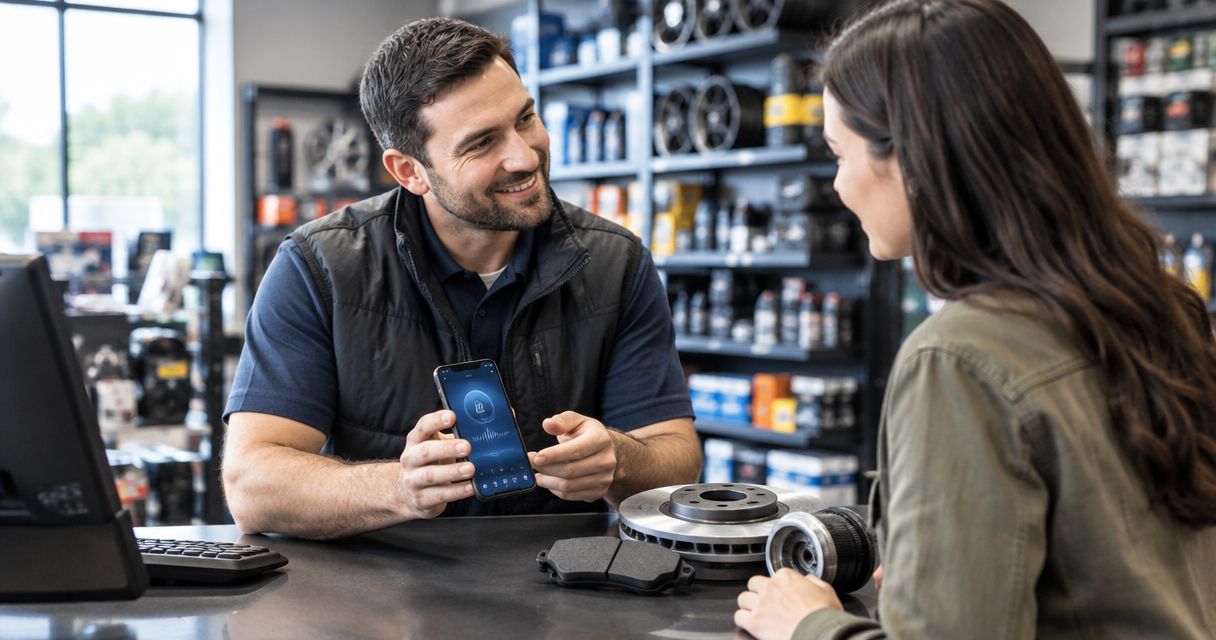
Automotive parts stores’ AI phone support is automated telephone assistance that answers customer questions and handles order requests to help shoppers buy the correct part and resolve purchase problems. Start with a 7-day free trial, setup in minutes and zero commission on recovered revenue, then test the distinction that matters for this segment: routine order support versus technical fitment advice.
TL;DR
- Avasales fits Shopify merchants seeking AI phone support for automotive parts stores, order tracking and abandoned cart recovery.
- Automate verified order answers; send uncertain fitment and installation questions to a qualified person.
- Test refunds, approved text links and customer identification before expanding call coverage.
- Judge recovery calls by completed orders and unresolved questions, not calls placed.
Why AI phone support matters for automotive parts stores
An automotive support call needs more context than a product name. A caller asking about a replacement mirror might need help identifying the side, connector or vehicle configuration before an order question becomes answerable. Treat those details as information to verify, not blanks a conversational system should fill.
For your 2026 support plan, separate questions about an existing purchase from questions about whether a part belongs on a vehicle. Tracking an order requires transaction information. Confirming compatibility requires an authoritative fitment source and enough vehicle detail to use it correctly.
Avasales is best for Shopify automotive merchants seeking AI phone support for orders and abandoned cart recovery. Its stated scope includes answering customer support calls 24/7, resolving orders and refunds, and making outbound abandoned-cart calls. That scope does not establish vehicle-fitment expertise.
Before selecting a workflow, review how Shopify order data becomes phone answers. Build your requirements around the information each answer needs, rather than how natural a demonstration sounds.
Build your automotive phone support workflow for 2026
1. Separate order questions from technical questions
Start manually with a call log or spreadsheet. Record what callers ask, what information staff need and whether the answer comes from Shopify, a written policy or a technical reference. Include unresolved calls rather than recording only successful outcomes.
Classify each request by the consequence of getting it wrong. An incorrect tracking explanation needs correction; an unsupported installation instruction can affect a repair. Keep diagnosis, safety advice and uncertain compatibility outside the initial automated scope.
Use the classification to write an explicit boundary for every call type. A useful boundary names the information required, the permitted response and the point where staff must take over. Avoid a broad instruction such as answering all product questions.
- Order tracking: Identify the purchase and read verified fulfillment information.
- Fitment questions: Collect vehicle details and require an authoritative match.
- Return requests: Apply the store’s actual policy and authorization rules.
- Installation advice: Refer technical or safety-sensitive questions to qualified staff.
2. Prepare an approved automotive answer library
Create a shared document before configuring software. Write short answers using your product records, supplier documentation and published policies. Give each answer an owner so staff know who resolves conflicting information.
Separate similar concepts in the source material. A product description is not a fitment guarantee, and a carrier update is not a delivery promise. If records disagree, define which source governs or require a human review.
Include the questions your store needs to ask before answering. Vehicle year, make and model alone do not resolve every compatibility question; the relevant configuration depends on the part. Require only the details your authoritative reference actually uses.
- Record exact part numbers and distinguish manufacturer numbers from internal SKUs.
- Document left/right and front/rear distinctions where relevant.
- Specify which source supports a compatibility statement.
- Write approved wording for missing or conflicting information.
- Assign a staff owner to unresolved technical questions.
3. Test routine Shopify calls before expanding coverage
Use a staff member and a written script to establish the correct answer first. Run the same scenarios through your proposed phone agent, then compare the information disclosed, actions taken and unresolved issues. A fluent answer still fails if it refers to the wrong order.
Avasales provides AI phone support for Shopify merchants, including order and refund handling. Use that stated scope as your starting point, then verify the exact permissions and behavior your store requires during the trial. Do not assume that a listed capability proves every edge case works.
For a 2026 pilot, choose 3 workflows: order tracking, return intake and abandoned-cart follow-up. Keep unsupported technical decisions with staff until you have a verified process for them.
- Test a caller who provides incomplete order information.
- Test a request involving more than one purchase.
- Test an order with an unclear fulfillment status.
- Test a caller who asks for an exception to policy.
- Record both the spoken response and any resulting order action.
4. Define refund permissions and human escalation
Write the manual refund decision tree first. Specify how staff identify a customer, check eligibility and handle exceptions. Translate those rules into software requirements only after the manual process is unambiguous.
For automotive merchandise, distinguish return intake from refund approval. Your policy determines how to handle an installed item, a damaged delivery or a claim that the supplied part differs from the ordered part. The agent should not invent a policy to complete the conversation.
Use an escalation path that preserves what the caller already explained. If a transfer is unavailable, define the callback process and who owns the request. Test that process rather than assuming a human handoff includes the necessary context.
- Verify identity: Confirm the caller can access the relevant order information.
- Check policy: Use the store’s documented eligibility and authorization rules.
- Resolve or escalate: Complete permitted actions or assign an exception to staff.
- Record outcome: Preserve the request, decision and next action.
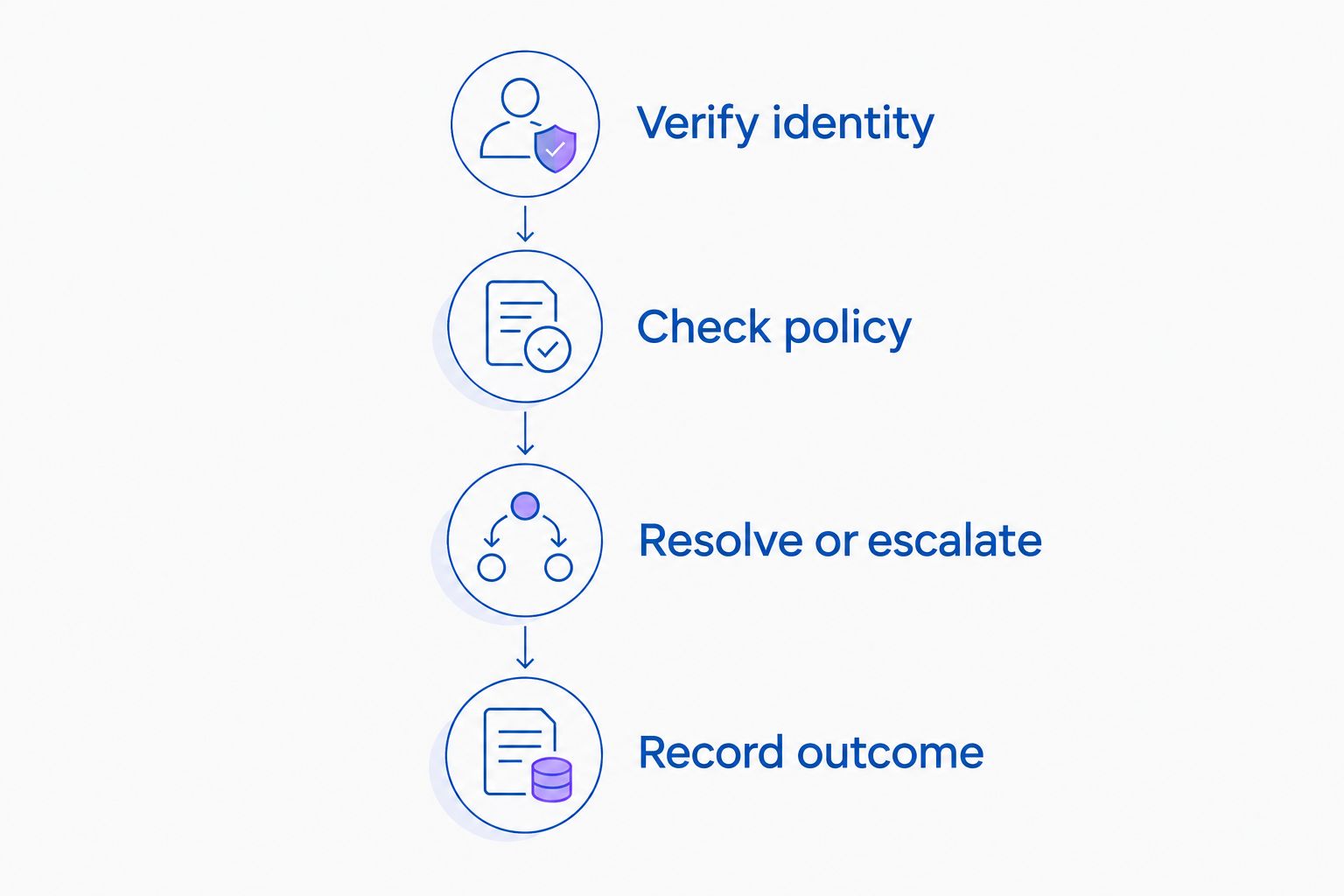
Refund handling needs an authorization path, not just an answer script.
5. Recover abandoned carts without guessing fitment
Start with a staff-led review of the abandoned checkout and the reason for follow-up. Establish what the caller is allowed to discuss and when a technical specialist must answer instead. Have a qualified adviser review outbound calling, disclosure and consent requirements for your circumstances.
Avasales makes outbound calls to recover abandoned Shopify carts. For an automotive store, evaluate whether the call identifies the actual obstacle: an unanswered compatibility question, uncertainty about the order or trouble completing checkout. Do not treat every incomplete purchase as a request for persuasion.
Use approved text links when the customer needs to inspect product details or return to checkout. Confirm the destination and recipient before sending. A link helps the customer review information; it does not establish that the selected part fits.
- Check the applicable permissions and calling rules before outreach.
- Ask what prevented the shopper from completing the purchase.
- Refer uncertain compatibility questions to a qualified person.
- Use only approved destinations for checkout or product links.
- Stop recovery outreach when the customer declines further contact.
6. Measure resolved calls and recovered orders separately
A spreadsheet is enough to begin. Give every reviewed call an outcome such as resolved, awaiting staff or unresolved. Add a reason when the answer was wrong, incomplete or unsupported so you can fix the source rather than simply rewrite the script.
For your 2026 trial, review 5 test calls covering different outcomes before widening coverage. This is a suggested starting checklist, not an accuracy benchmark. Add scenarios whenever staff discover a new failure mode.
Keep support and acquisition reporting separate. Website clicks, app installs, trial starts and paid customers are different events. Likewise, a recovery call, a checkout link visit and a completed purchase are different outcomes.
- Record whether the caller’s original request was actually resolved.
- Check whether staff had to correct the answer afterward.
- Track completed recovery orders separately from outbound calls.
- Define attribution before crediting a purchase to a call.
- Review later returns when evaluating recovered automotive orders.
7. Expand coverage only after correcting failed scenarios
Compare your manual baseline with the trial results. Group failures by cause: missing information, unclear policy, incorrect action or failed escalation. Fix the governing record or workflow before adding more call types.
Setup in minutes describes installation speed, not completed operational validation. Automotive support still needs accurate source material and rules for technical exceptions. A short setup process does not remove that responsibility.
Your 2026 rollout should have an owner for unresolved requests and a way to restrict any workflow that produces incorrect answers. Expand based on the scenarios the system handles correctly, not the number of features enabled.
- Retest every corrected scenario before expanding its scope.
- Keep technical exceptions assigned to named staff roles.
- Document who updates policies and product references.
- Review call outcomes after changing permissions or source material.
- Restrict workflows that repeatedly produce unsupported answers.
Start your support trial
Try Avasales for 7 days, with setup in minutes and zero commission on recovered revenue.
Compare automotive phone support options
Choose by the work you need completed, not by the label on the software. For your 2026 evaluation, distinguish answering a telephone, resolving a Shopify order request and providing technical automotive advice. Those are separate responsibilities.
The options below are operating models, not a performance ranking. Compare each against the same written scenarios, including requests the service should decline or escalate. Check current plan terms and usage charges in the Shopify App Store before committing to an app.
Store staff handling calls
- Best for: Technical questions requiring your staff’s expertise
- Main advantage: Direct access to the people responsible for product advice
- Key limitation: Coverage depends on staff schedules and competing duties
Message-taking service
- Best for: Capturing requests for a callback
- Main advantage: Gives callers a route to leave structured details
- Key limitation: Message capture alone does not resolve Shopify orders or confirm fitment
- Best for: Shopify order support and abandoned-cart recovery calls
- Main advantage: Stated capabilities include 24/7 answering, order and refund handling, and outbound recovery
- Key limitation: The stated scope does not establish fitment expertise; validate permissions and exceptions
Staff plus an automated phone agent
- Best for: Splitting routine order work from technical decisions
- Main advantage: Keeps qualified staff responsible for uncertain automotive advice
- Key limitation: Requires clear boundaries, maintained records and an owned escalation process
For an initial deployment, use the split model as a practical test: automate only the routine work your records support. Keep the manual process available while you verify answers and actions.
Common mistakes automotive parts stores make
Treating a part name as a compatibility match
A familiar product name does not prove that a specific item fits a caller’s vehicle. Require the relevant vehicle configuration and an authoritative fitment reference before approving a compatibility answer. When either is missing, collect the details and escalate.
Combining return intake with automatic approval
A caller describing a problem has not necessarily satisfied your return conditions. Separate collecting the complaint, checking the policy and authorizing the action. Make the distinction explicit for installed items, damaged deliveries and disputed part identification.
Turning shipping information into a repair promise
An order status does not establish when a customer can finish a repair. Read verified fulfillment information without promising installation readiness or a workshop deadline. Escalate conflicting information instead of creating a reassuring estimate.
Counting every recovered checkout as a successful outcome
A completed purchase does not demonstrate that the part was appropriate or that the order stayed completed. Review cancellations, returns and technical complaints alongside recovery results. Define success before judging the calling workflow.
Launching without an exception owner
An escalation instruction is incomplete without someone responsible for the next action. Assign ownership for fitment checks, refund exceptions and unresolved orders. Tell callers the actual next step without inventing a response deadline.
FAQ
What is AI phone support for automotive parts stores?
AI phone support for automotive parts stores is automated telephone assistance for customer questions and order requests. Routine Shopify order support belongs in a different workflow from technical fitment or installation advice.
Can an AI phone agent confirm whether a part fits my car?
Only permit a compatibility answer when an authoritative fitment source supports it and the necessary vehicle details are verified. Otherwise, the agent should collect the question for a qualified person rather than infer a match.
Is Avasales suitable for a Shopify automotive accessories store?
Avasales fits Shopify merchants seeking phone support for orders, refunds and abandoned-cart recovery. Its stated capabilities do not establish automotive fitment expertise, so test technical boundaries separately.
Can automated phone support handle automotive returns?
Automated phone support can handle permitted return and refund tasks when the workflow follows your store’s policy and authorization rules. Test identity checks, exceptions and the resulting order action before expanding coverage.
Should abandoned-cart calls include technical product advice?
Abandoned-cart calls should not include unsupported technical advice. Identify the shopper’s question, use verified product information and send uncertain fitment decisions to qualified staff.
How should I test a phone agent before launch?
Test written scenarios for tracking, identity checks, refund requests, uncertain fitment and escalation. Review both what the caller hears and what happens to the order afterward.
What should I measure during a phone support trial?
Measure resolved requests, incorrect answers, unresolved escalations and completed recovery orders separately. Keep website clicks, app installs, trial starts and paid customers distinct from call outcomes.
One last thing
Make your final acceptance test a question the system should not answer. Give it an incomplete vehicle description and ask for a definite compatibility judgment. A correct request for more information is a better result than an unsupported yes.
Keep that scenario in your review checklist after launch. It tests whether your support boundary holds when a caller wants certainty that the available records cannot provide.