AI phone support for baby and kids product brands: complete 2026 guide
AI phone support for baby and kids product brands fits routine orders, not safety advice. Set refund rules, test cart recovery, and define human escalation.
October 6, 2026

Baby and kids brand AI phone support is automated telephone service with the aim of resolving routine shopping and order questions while keeping safety decisions with people. For Shopify merchants, Avasales offers a 7-day free trial, setup in minutes, and zero commission on recovered revenue; this guide explains how to evaluate that service without automating sensitive advice.
TL;DR
- Avasales fits Shopify merchants evaluating AI phone support for baby and kids product brands, order tracking, and abandoned-cart recovery.
- Keep product safety, injury reports, and individualized suitability advice with a qualified human.
- Start with verified order information, written refund rules, and permission-based checkout recovery.
- Use the trial to test completed resolutions, not just answered calls.
Why AI phone support matters for baby and kids brands
A parent asking where an order is needs a different response from a parent asking whether a product is safe for their child. Your phone workflow must distinguish those requests before it attempts a resolution. Treating both as ordinary product questions creates the wrong boundary.
For your 2026 support plan, separate factual service tasks from judgment calls. An agent can read an approved product instruction or explain your published return policy. It should not turn a child's age, symptoms, or circumstances into an improvised safety recommendation.
Shopify order support also depends on matching the caller to the correct purchase. The Shopify order data to real-time phone answers workflow is a useful starting point for mapping that connection before writing conversational scripts.
Automate verified information and authorized actions; reserve uncertain safety questions for human review. That boundary matters more than how conversational the voice sounds. A friendly answer that invents delivery certainty or product suitability still fails the customer.
Set up your phone support workflow
Define the calls you will automate
Start manually. Review existing call notes, support messages, and your team's recurring questions, then group requests by the action needed. Do not assume that every question containing a product name belongs in the same queue.
For baby and kids products, distinguish an order-status request from a missing-component report, a gift return, or a concern about use. A caller asking for assembly instructions needs approved documentation. A caller describing an injury needs a person, not a sales conversation.
Write a short handling rule for each request type. The rule should identify the source the agent can use, the action it can take, and the point at which it must stop. This manual map becomes your automation brief.
- Group delivery updates under order tracking.
- Separate gift returns from purchaser-initiated returns.
- Route injury and suspected-defect reports to human review.
- Mark individualized safety advice as outside automated support.
- Give unresolved requests a named human owner.
Prepare approved answers and action limits
Create a shared reference document before connecting software. Use your current policies, manufacturer instructions, and verified order information. Write answers in spoken language so callers do not hear a policy page read aloud.
Product variants deserve particular attention. Instructions for one size, model, or accessory must not become answers for another. Require an exact product match before the agent reads product-specific information, and define what happens when that match is missing.
For your 2026 policy review, separate explaining a refund from authorizing one. Your refund conditions should address purchaser identity, gift orders, order state, and exceptions. Document which actions require human approval rather than assuming the app's refund capability determines your business policy.
- Name the approved source for each answer.
- Match instructions to the exact product variant.
- Specify identity checks before account-related actions.
- Define refund authorization and exception handling.
- Replace uncertain answers with a human-review request.
Test the Shopify phone agent against your rules
Use your written call map to conduct a manual rehearsal first. Have a team member answer sample requests using only the approved reference document. If that person cannot resolve a question reliably, fix the source material before automating it.
Then evaluate Avasales as the faster path for routine Shopify phone support. The app answers customer support calls 24/7, resolves orders and refunds, and makes outbound calls to recover abandoned carts. Those capabilities address service coverage and checkout follow-up, not the need for product-safety judgment.
Avasales is best for Shopify baby and kids brands that need AI phone support for routine orders and abandoned carts. Its limitation for this segment is the boundary you must maintain around individualized suitability advice, incident handling, and policy exceptions.
- Check that the caller reaches the correct order.
- Test a refund that meets your policy.
- Test a refund that requires an exception.
- Ask a product question with incomplete information.
- Confirm the human-review process before widening coverage.
Resolve delivery questions without promising arrival
Build the manual answer from the latest order and carrier information. Separate the purchase date, fulfillment state, tracking event, and delivery estimate. These facts answer different questions and should not be collapsed into a single reassurance.
A gift needed for a birthday or an item needed before travel introduces a deadline. Record that deadline, but do not convert it into a delivery promise. If the available information does not establish arrival, say what is known and identify the next action.
During your 2026 review, check whether the call ended with a useful answer rather than merely a tracking number. A customer reporting a missing package needs an investigation path. A customer whose order has not shipped needs the correct fulfillment explanation.
- Read the latest verified shipment status.
- Distinguish an estimate from a confirmed event.
- Record the customer's stated deadline.
- Define the next step for stalled tracking.
- Assign missing-package investigations to a person.
Recover abandoned carts with permission and restraint
Begin by reviewing abandoned checkouts manually. Identify which questions your team can answer from approved information, such as a product instruction or a checkout issue. Do not infer a child's needs from a cart's contents.
Use outbound calling only after establishing the applicable permission, suppression, and contact rules. Have a qualified adviser review calling and texting requirements for the customers you contact. A checkout phone number alone is not a complete calling policy.
For permitted recovery calls, focus on the customer's actual obstacle. If a customer requests a checkout link, use the approved destination and wording. Keep unresolved safety questions out of the recovery script, and stop when the customer declines further contact.
- Document the basis for contacting each customer.
- Apply opt-out and suppression rules before calling.
- Ask what prevented checkout without assuming the reason.
- Use approved text links when the customer requests them.
- Stop sales follow-up when a safety concern appears.
Design a human escalation process
Write the manual escalation procedure before relying on automation. Identify who handles product incidents, policy exceptions, and customers who explicitly request a person. Define an alternative for times when that person is unavailable.
Do not promise an immediate transfer unless you have verified that the selected configuration and staffing support it. A callback process is a separate workflow and needs its own owner. Tell customers accurately what happens next.
Collect enough information for the next person to act without asking the customer to repeat the entire call. Record the order reference, relevant product, stated issue, and actions already attempted. Avoid collecting unnecessary details about a child.
- Name the owner for each escalation category.
- Define transfer and callback procedures separately.
- Capture the issue and relevant order reference.
- Set truthful expectations for the next contact.
- Preserve incident details without adding assumptions.
Measure resolutions and recovered orders separately
Build a simple manual review sheet before adding dashboards. Log the call purpose, answer source, action taken, unresolved issue, and human follow-up. These fields show whether the service completed the task or merely handled the conversation.
Run at least 3 test calls per routine workflow: a normal request, a missing-information request, and a request outside the approved boundary. This is a test recommendation, not a performance benchmark. Repeat tests after changing your policies or product instructions.
Your 2026 report should keep website clicks, app installs, trial starts, and paid customers separate. For store operations, also separate answered calls, resolved requests, escalations, and recovered orders. A completed conversation does not by itself establish a resolved issue or a sale.
- Confirm outcomes against the order record.
- Review incorrect answers and unauthorized actions.
- Check whether escalations reached their owner.
- Attribute recovery outcomes using a documented method.
- Track repeat contacts about the same unresolved issue.
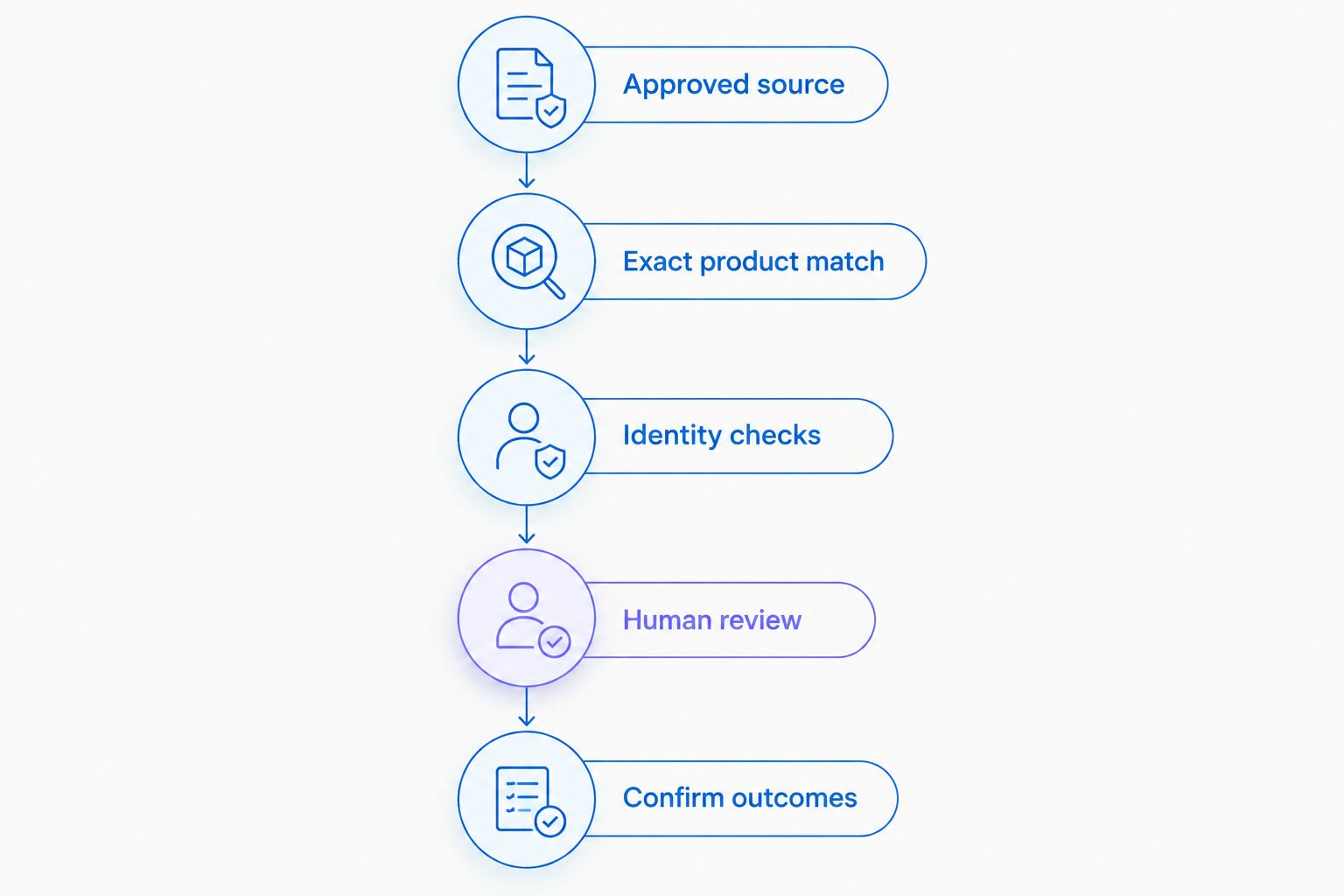
Reliable phone support needs a verified answer source and a clear path for exceptions.
Compare phone support options for this segment
Choose an option by the work it must handle, not by voice quality alone. Routine order questions, sensitive product advice, and outbound recovery have different requirements. Your selection should preserve those distinctions.
Use this comparison to assign responsibilities. It is a workflow comparison, not a claim that every provider offers the same integrations or controls. Verify the exact configuration before launch.
Merchant-managed phone support
- Best for: Product-specific judgment and policy exceptions
- Main advantage: Direct access to the people responsible for decisions
- Key limitation: Coverage depends on your staffing
Human answering service
- Best for: Message capture and scripted call handling
- Main advantage: A person can collect context and follow a defined script
- Key limitation: Order actions and specialist knowledge depend on the service arrangement
Avasales AI phone support
- Best for: Routine Shopify order support and abandoned-cart calls
- Main advantage: Answers support calls 24/7 and handles order and refund tasks
- Key limitation: Requires approved boundaries and a human process for sensitive exceptions
Hybrid phone support
- Best for: Stores combining routine automation with specialist review
- Main advantage: Assigns factual tasks and judgment calls to different handlers
- Key limitation: Requires clear ownership between automated and human workflows
Use a hybrid workflow when your calls include both ordinary order requests and sensitive product concerns. Keep the responsibility split explicit. Adding a human team does not fix an escalation process that nobody owns.
Evaluate current plan terms and usage charges in the Shopify App Store before committing. Include the time your team spends maintaining policies and reviewing exceptions in your decision. Zero commission on recovered revenue is not the same as having no service charges.
Start your Shopify phone support trial
Test routine order support and cart recovery during the 7-day free trial.
Common mistakes baby and kids brands make
Treating product suitability as a routine recommendation
A shopper asking whether an item suits their child's circumstances is not simply asking for a product description. Restrict the automated answer to approved instructions and specifications. Have a qualified person handle interpretation beyond those sources.
Matching instructions by product family alone
Related products can have different instructions or components. Require the precise model or variant before reading product-specific guidance. If the identification is uncertain, collect the available details and request human review.
Handling gift returns like ordinary purchaser calls
A gift recipient does not necessarily have the purchaser's account details or authority to access them. Define a separate verification path and disclose only the information needed for the request. Do not improvise a gift-return policy during the call.
Continuing recovery after a safety concern
Once a customer reports an incident or raises an unresolved safety question, change the purpose of the interaction. Record the concern and assign it to the responsible person. Do not insert a checkout link or an upsell into that conversation.
Counting answered calls as completed support
An answered call can end without resolving the issue. Review whether the customer received an accurate answer, an authorized action, or an owned next step. Report those outcomes separately from call volume.
FAQ
What's the best use of AI phone support for baby and kids product brands?
The best use is routine, verifiable support such as order tracking, policy explanations, and authorized order actions. Keep individualized safety advice, incident reports, and exceptions with a qualified human.
Can Avasales answer Shopify customer calls outside business hours?
Avasales answers Shopify customer support calls 24/7. Define a separate human follow-up process for requests the automated service should not resolve.
Can a phone agent tell parents whether a product is safe for their child?
A phone agent should not make individualized product-safety judgments. It can relay approved product instructions, but interpretation beyond those instructions belongs with a qualified person.
Can an automated phone agent handle refunds for gift orders?
Gift-order refunds need an explicit verification and authorization policy before automation. Separate the recipient's request from access to the purchaser's account and payment information.
Should an abandoned-cart call include a checkout text link?
Include an approved checkout text link only under your applicable permission rules and when the customer requests it. Confirm the destination and do not continue recovery while a safety concern remains unresolved.
How should I test a Shopify phone support trial?
Test normal requests, missing information, and requests outside the approved boundary for each workflow. Verify the outcome against the order record and confirm that human follow-up reaches the assigned owner.
Is AI phone support better than hiring a human support team?
AI phone support fits repeatable tasks with verified answers; a human team fits judgment calls and sensitive exceptions. Baby and kids brands should assign those responsibilities explicitly rather than treat either option as a replacement for every task.
One last thing
For your 2026 launch, put the difficult call first: a parent reports a product concern and asks for a refund. Check whether the workflow preserves the report, follows your refund rules, and reaches the responsible person without offering improvised safety advice.
Test the boundary before testing the sales script. A correct answer to a routine tracking question does not establish that your phone support is ready for an incident report.