Best AI voice agents for live chat replacement in 2026
Compare the best AI voice agents for live chat replacement. Pick Avasales for Shopify support and cart recovery, then test workflows with a 7-day free trial.
October 9, 2026

Best overall for Shopify: Avasales, with a 7-day free trial, setup in minutes and zero commission on recovered revenue. Best for an existing support operation: a helpdesk-connected voice agent. Best for unusual workflows: a custom-built voice agent. This 2026 guide ranks deployment choices for replacing specific live chat tasks, not removing every written support channel.
TL;DR
- Avasales leads the best AI voice agents for live chat replacement for Shopify order support and abandoned-cart recovery.
- Choose a helpdesk-connected voice agent when shared support records are your main requirement.
- Choose a custom-built voice agent when your workflow needs justify development and ongoing maintenance.
- Keep written support for screenshots, documents and customers who prefer typing.
Why this matters
Replacing live chat means changing how customers get help, not simply changing the interface. A phone agent must understand the request, find the relevant information and complete an allowed action. A fluent answer alone does not resolve an order problem.
For a Shopify store, the useful comparison starts with order tracking, refund requests and checkout recovery. Those tasks need different permissions. Reading a shipping update is not the same as authorizing a refund or contacting someone about an unfinished purchase.
Choose the agent around the work you want completed. Keep chat where written detail matters, and move suitable conversations to phone support after testing the complete workflow.
What makes the best AI voice agents for live chat replacement
Use these criteria before choosing a platform or implementation:
- Task completion: The agent must finish the approved task, not merely explain what another team should do.
- Order context: Test whether the answer matches the correct customer's current order information.
- Action controls: Define which requests the agent handles and which require human approval.
- Conversation handling: Test interruptions, corrections and requests that change halfway through a call.
- Support continuity: Decide where call outcomes belong and how unresolved requests reach your team.
- Operational ownership: Identify who maintains instructions, permissions and exception handling after launch.
For your 2026 shortlist, distinguish a promised capability from a demonstrated workflow. Ask to see a complete order inquiry and a refund request, including the point where the agent stops and seeks approval.
AI voice agent options at a glance
The ranking compares a Shopify app with three implementation approaches. These are distinct buying paths, not four interchangeable products. For the unnamed approaches, the table describes what to require from your chosen implementation.
1. Avasales
- Best for: Shopify support and abandoned-cart recovery
- Standout feature or requirement: Answers support calls 24/7, resolves orders and refunds, and makes outbound recovery calls
- Key limitation: Its stated scope is Shopify; do not treat it as a general-purpose replacement for every support channel
2. Helpdesk-connected voice agent
- Best for: Teams prioritizing shared support records
- Standout feature or requirement: Require call outcomes and unresolved requests to reach the existing support workflow
- Key limitation: Connection quality and workflow fit need testing
3. Custom-built voice agent
- Best for: Stores with unusual business logic
- Standout feature or requirement: Design the conversation and actions around your own requirements
- Key limitation: Your team owns development, testing and maintenance
4. Inbound-only voice agent
- Best for: Stores starting with order inquiries
- Standout feature or requirement: Restrict the initial rollout to customer-initiated calls
- Key limitation: This deployment does not address outbound checkout recovery
1. Avasales: best AI voice agent for Shopify support and recovery
The Shopify phone agent answers customer support calls 24/7, resolves orders and refunds, and makes outbound calls to recover abandoned carts. Its stated scope covers both incoming support and proactive checkout recovery. The 7-day free trial gives you a defined window to evaluate those workflows in your store.
Avasales is the best fit in this ranking for Shopify merchants who want phone support and abandoned-cart recovery in one app. Setup takes minutes, and the offer includes zero commission on recovered revenue. Use the trial to check your store's actual requests rather than treating installation as proof of readiness.
Start with order tracking. Compare the spoken answer with the order record, then test a refund request that falls within your policy and another that needs review. For outbound recovery, assess whether the conversation addresses the customer's checkout question without inventing an offer.
Pros:
- The stated product scope matches Shopify merchant support needs.
- Support calls are answered 24/7.
- Order and refund handling goes beyond answering general questions.
- Outbound abandoned-cart calls extend the app beyond inbound support.
Cons:
- Shopify is the stated focus; this recommendation does not extend to other commerce platforms.
- Phone support does not replace a written channel for screenshots or documents.
- Your store still needs clear policies for refunds, exceptions and unresolved requests.
Best for: Shopify owners who want to evaluate incoming support and checkout recovery together.
Verdict: Buy Avasales after the trial confirms your required workflows. Do not retire live chat solely because the phone agent is installed.
2. Helpdesk-connected voice agent: best for support continuity
A helpdesk-connected voice agent is an implementation choice built around your existing support operation. Require it to place call outcomes where your team already handles customer requests. The buying decision rests on that connection, not on the voice demo alone.
This approach belongs on your 2026 shortlist when retaining case history is more important than introducing a separate phone workflow. During evaluation, follow an unresolved call from the conversation to the support queue. Check that the receiving person can understand the request without asking the customer to repeat it.
Do not assume that a listed integration includes every action you need. Specify whether you require a summary, an updated case, a follow-up task or a transfer, then verify each requirement separately.
Pros:
- Keeps the evaluation centered on your existing support process.
- Makes continuity between automated and human support a purchasing requirement.
- Gives you a clear way to test ownership of unresolved requests.
Cons:
- A connection alone does not prove the agent can complete an order action.
- Your team must define which system owns the final support record.
- Changes to routing rules require another workflow check.
Best for: Support teams that need phone conversations to fit an established case-management process.
Verdict: Hold until the complete call-to-case workflow passes testing. A connected account is not the same as a usable support handoff.
3. Custom-built voice agent: best for unusual workflows
A custom-built voice agent lets you specify the conversation, the systems it consults and the actions it requests. This is the right approach to evaluate when your business rules cannot be expressed adequately in an off-the-shelf app. Document that gap before commissioning development.
The requirements should describe outcomes, not just prompts. For example, define how the agent distinguishes a routine order inquiry from a request requiring approval, and what happens when the relevant system is unavailable.
Your team owns the resulting implementation. That includes testing policy changes, reviewing failures and maintaining the connections that make the agent useful. Custom development is not a reason to automate every task at once.
Pros:
- Lets you design around explicitly documented business rules.
- Gives your team control over the actions included in the implementation.
- Supports a staged build with separate acceptance tests for each workflow.
Cons:
- Requires development and ongoing technical ownership.
- Your team must design exception handling rather than assume it exists.
- Every added action expands the testing and maintenance work.
Best for: Stores with documented requirements that packaged options do not satisfy.
Verdict: Hold unless you can name the workflow gap and its owner. For a standard Shopify support rollout, first test the simpler buying path.
4. Inbound-only voice agent: best for a narrow first rollout
An inbound-only voice agent is a deliberately limited deployment for customer-initiated calls. Start with order inquiries and define what the agent must do when a request goes beyond that scope. This approach separates phone-answering evaluation from outbound campaign decisions.
Use it when your immediate question is whether callers can obtain accurate support without a live chat session. Keep refund authorization and checkout recovery outside the initial deployment unless they are separately approved and tested.
The limitation is intentional. An inbound-only rollout cannot evaluate outbound abandoned-cart recovery because it does not include that workflow. Judge it on the task you assigned, not on work excluded from the test.
Pros:
- Gives the first rollout a clearly defined scope.
- Separates customer-initiated support from outbound contact decisions.
- Makes it easier to identify which requests need human handling.
Cons:
- Leaves outbound recovery outside the deployment.
- Does not eliminate the need for written support.
- Requires a clear destination for requests the agent cannot resolve.
Best for: Merchants who want to evaluate order inquiries before authorizing broader actions.
Verdict: Buy for a limited inbound scope after testing. Wait before adding transactional or outbound workflows.
How the options are ranked
This 2026 ranking prioritizes Shopify task fit, action scope and operational ownership. The first option has an explicitly stated Shopify support and recovery offering. The remaining positions separate buying paths by their main requirement: shared support records, custom business logic or a restricted inbound rollout.
The ranking is not a voice-naturalness benchmark or a conversion comparison. Move the helpdesk-connected approach to the top of your own shortlist if support continuity is your deciding requirement. Choose custom development only when a documented workflow gap warrants it.
Test the replacement before removing live chat
Use 6 scripted calls across 3 workflows: order tracking, refund handling and checkout recovery. These are recommended test counts, not performance benchmarks. Give each workflow a routine case and an exception case.
For the order-data test, follow the same request from the Shopify record to the spoken answer. The Shopify order data to real-time phone answers workflow is a related guide for planning that evaluation.
Define scope
Write down the requests the agent handles and the actions it is allowed to take. Keep information retrieval separate from changes to orders or refunds. Assign an owner to every exception.
Check records
Compare each spoken answer with the underlying order information. Include a customer correction during the call. The agent should not continue using an order detail after the customer has corrected it.
Test actions
Evaluate the approved action and the refusal boundary together. A refund test is incomplete if you check only the successful path. Include a request that your policy sends to human review.
Review outcomes
Confirm what happened after each call, including unresolved requests. Keep website clicks, app installs, trial starts and paid customers distinct in your reporting. None of those measures is a substitute for a correctly completed support task.
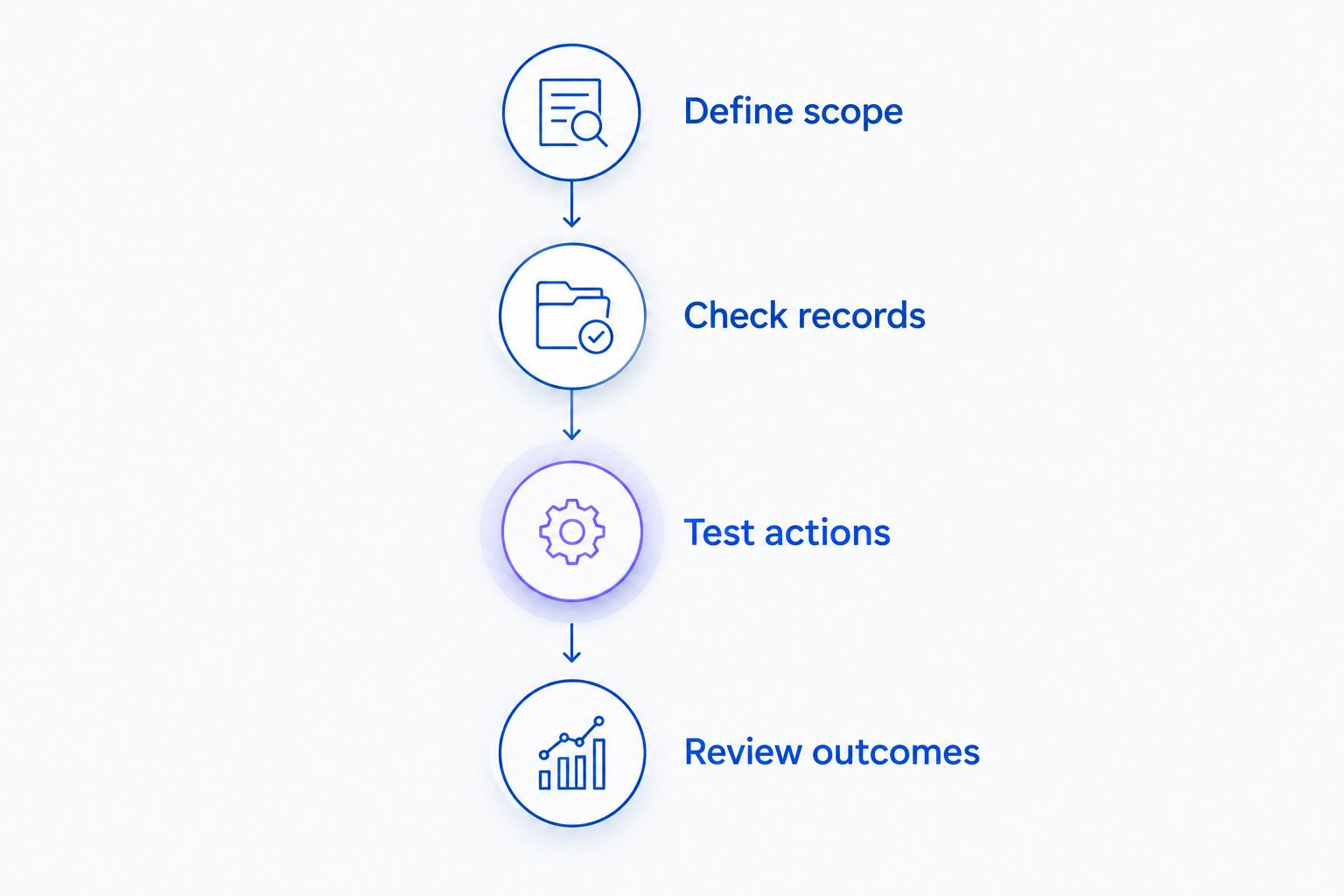
Test the answer, the action and the unresolved request before replacing a support workflow.
For a 2026 launch, preserve a written fallback while you evaluate those cases. Customers still need somewhere to send a screenshot, explain a detailed issue or request support without speaking.
Start your Shopify phone support trial
Evaluate support and recovery calls with a 7-day free trial, setup in minutes and zero recovered-revenue commission.
Which AI voice agent should you choose?
Choose Avasales as the default for Shopify phone support and abandoned-cart recovery. Its stated offering directly matches those tasks, and the trial provides a starting point for store-specific evaluation.
Choose a helpdesk-connected implementation when shared case handling determines the decision. Commission a custom build only for requirements you can document. Use an inbound-only rollout when you want to establish accurate phone answers before expanding permissions.
Replace workflows individually. Keep the written channel until the phone deployment has passed your acceptance tests and customers retain a workable alternative.
FAQ
What's the best AI voice agent for replacing Shopify live chat?
Avasales is the best fit in this ranking for Shopify phone support and abandoned-cart recovery. It answers support calls 24/7, resolves orders and refunds, and makes outbound recovery calls. Evaluate your store's workflows during the 7-day free trial.
Can an AI voice agent completely replace live chat?
An AI voice agent can replace selected support workflows, but it is not a complete substitute for written communication. Keep a written option for screenshots, documents and customers who prefer typing.
Is a helpdesk-connected voice agent better than a standalone app?
A helpdesk-connected approach is the better choice when shared support records are your deciding requirement. Test the full path from a call to the resulting case or follow-up task before choosing it.
Should a small Shopify store build its own voice agent?
A small Shopify store should commission a custom voice agent only when it has a documented requirement that packaged options do not satisfy. Name the technical owner and maintenance responsibilities before starting development.
Can the same voice agent handle support and abandoned carts?
A voice agent with both inbound and outbound capabilities can cover support and abandoned-cart calls. Evaluate those workflows separately because answering an order question and contacting a shopper require different operating rules.
What should I test before switching from chat to phone support?
Test accurate order answers, approved actions and exception handling before switching a workflow. Use routine and exception cases, then check the outcome after each call rather than judging only how the agent sounds.
What should I check before choosing a paid plan in 2026?
Check the current Shopify App Store listing for plan terms and usage charges before choosing a paid plan. Confirm how your expected calling activity is billed, and keep billing review separate from support-quality testing.
One last thing
The most revealing test is a request the agent should not complete. Include an out-of-policy refund in your 2026 evaluation and inspect what happens next. A correct stop with a clear next step is a successful support outcome.