Best AI voice agents for WhatsApp and SMS support in 2026
Compare the best AI voice agents for WhatsApp and SMS support. Choose Ava AI for Shopify calls, and test messaging, order actions and handoffs before buying.
October 9, 2026
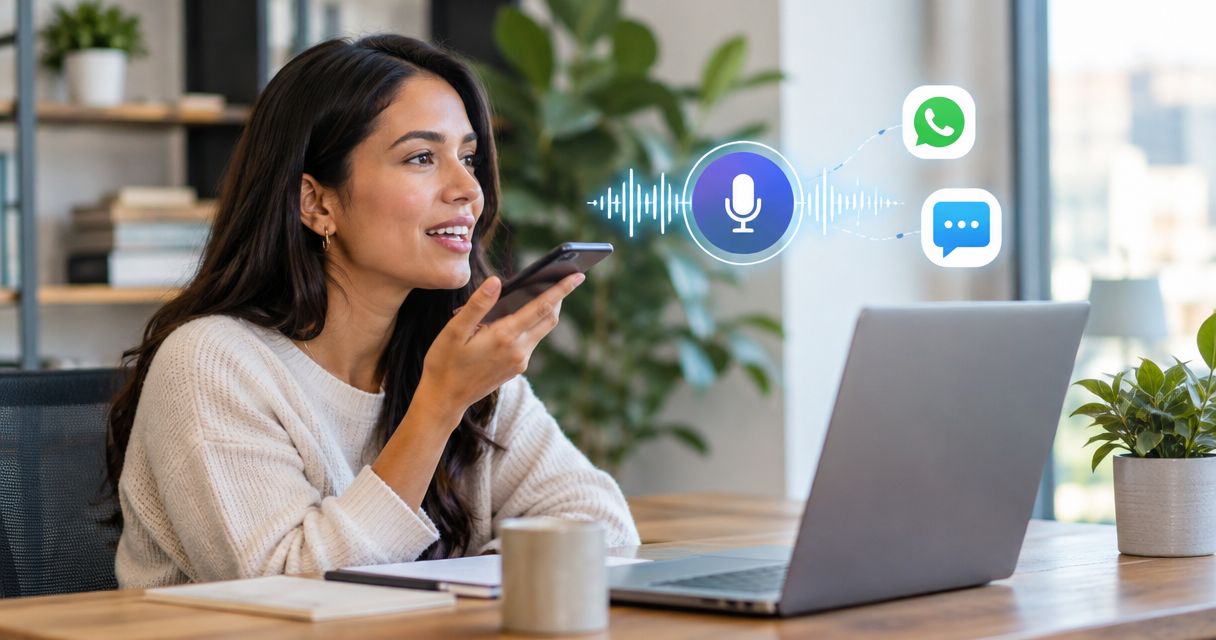
Best for Shopify phone support: Avasales, with a 7-day free trial, setup in minutes and zero commission on recovered revenue. Best for WhatsApp and SMS conversations: a messaging-first helpdesk; best for combining calls with written follow-up: a connected voice-and-messaging stack. This 2026 guide ranks those approaches by the customer problem they solve, without treating phone calls, WhatsApp messages and SMS as interchangeable capabilities.
TL;DR
- For the best ai voice agents for whatsapp and sms support, rank phone handling and messaging capabilities separately.
- Avasales is best for Shopify merchants needing automated phone support and abandoned-cart recovery calls.
- Choose a messaging-first helpdesk when WhatsApp and SMS conversations are your main support workload.
- Choose a connected stack when customers need calls, approved text links and shared conversation history.
Why this matters
A customer asking where an order is needs an accurate answer. A customer requesting a refund needs a permitted action. A shopper stuck at checkout needs help completing the purchase, sometimes followed by a written link.
Those tasks involve different capabilities. Answering a telephone call does not establish that a product can manage a WhatsApp conversation, read a voice note or receive an SMS reply. Your 2026 shortlist should separate each capability before comparing vendors.
Avasales is best for Shopify merchants who need phone support and outbound abandoned-cart recovery calls. Its app, Ava AI, answers customer support calls 24 hours a day, resolves order and refund requests, and calls shoppers about abandoned carts. Evaluate messaging requirements separately rather than assuming they come with phone automation.
What makes the best voice-and-messaging support setup
Use these criteria before reading a feature list:
- Channel fit: Identify whether you need telephone calls, WhatsApp text, WhatsApp voice notes, SMS, or a combination. Ask for a demonstration of each required channel.
- Order accuracy: Require answers tied to the correct Shopify order, with customer verification before sensitive information or actions.
- Action control: Define which cancellations, refunds and recovery actions the agent can perform, and which need human approval.
- Conversation continuity: Check whether a customer can move between a call and a message without repeating the entire request.
- Consent and link control: Specify when outbound contact is permitted and which checkout, tracking or return links can be sent.
- Operational ownership: Decide who maintains instructions, reviews failures and handles exceptions after launch.
A polished voice demonstration addresses only part of this checklist. Your buying decision should depend on whether the setup completes your actual support task.
Best options at a glance
This comparison ranks implementation approaches, not unverified messaging features. The options below serve distinct needs; only the first is a named product recommendation.
1. Avasales with Ava AI
- Best for: Shopify phone support and cart-recovery calls
- Standout capability or design: Answers support calls and makes outbound abandoned-cart calls
- Key limitation: Evaluate WhatsApp and SMS requirements separately
2. Messaging-first helpdesk
- Best for: WhatsApp and SMS conversation management
- Standout capability or design: Puts written support workflows at the center of selection
- Key limitation: Telephone automation needs separate evaluation
3. Connected voice-and-messaging stack
- Best for: Calls that need written follow-up
- Standout capability or design: Assigns voice and messaging to dedicated components
- Key limitation: Connections and handoffs need ongoing ownership
4. Custom channel workflow
- Best for: Store-specific approval and routing rules
- Standout capability or design: Lets your team define channel and action boundaries
- Key limitation: Requires implementation and maintenance work
1. Avasales: best for Shopify phone support and cart recovery
Ava AI is a voice phone agent app for Shopify store owners. It answers customer support calls around the clock, resolves order and refund requests, and makes outbound calls to recover abandoned carts.
Choose this option when telephone support is the immediate bottleneck. A caller who needs an order answer and a shopper who needs checkout assistance are concrete use cases, unlike a broad requirement to automate every channel at once.
Avasales pros
- Shopify merchants are the stated target users.
- Inbound support and outbound cart-recovery calls are both part of the offering.
- Order and refund requests fall within the app's stated support scope.
- The 7-day free trial gives you a defined evaluation window.
Avasales cons
- Phone capability alone does not establish WhatsApp inbox, voice-note or two-way SMS support.
- Your store still needs rules for refund authority, customer verification and exceptional requests.
- A successful recovery call does not prove that every cross-channel handoff meets your requirements.
Best for: Shopify merchants whose priority is answering calls and contacting shoppers about abandoned carts.
During your trial, use store-approved test scenarios for order tracking, refund requests and checkout recovery. Check the answer, the action taken and the final order state. When a workflow needs an approved text link, verify the destination and delivery process rather than judging only the conversation.
Verdict: Buy for a phone-first Shopify requirement after the trial passes your support checks; hold for a WhatsApp-first requirement until that channel is demonstrated.
2. Messaging-first helpdesk: best for WhatsApp and SMS conversations
A messaging-first helpdesk is an implementation category, not a specific vendor endorsement. Choose within this category when your central requirement is managing written conversations, incoming replies and agent follow-up.
Your shortlist should demonstrate the exact channels you use. WhatsApp text, WhatsApp voice notes and SMS replies should each have their own acceptance check; a generic messaging label is insufficient.
Messaging-first helpdesk pros
- Written conversations become the primary buying criterion.
- Your evaluation can focus on replies, assignment and unresolved requests.
- Staff can review whether messages contain the right order details and next action.
Messaging-first helpdesk cons
- Support for written messages does not prove automated telephone support.
- Voice-note handling needs a separate demonstration from text handling.
- A shared inbox alone does not establish permission to process Shopify refunds.
Best for: Stores whose customer-service workload centers on WhatsApp and SMS exchanges.
In a 2026 demonstration, ask the vendor to receive a customer message, identify the relevant order and answer a follow-up. Then introduce a request that requires human approval. Watch how the conversation remains assigned until someone resolves it.
Require the vendor to show incoming replies, not just outbound notifications. Sending a tracking message and handling a customer who disputes that tracking update are different tasks.
Verdict: Buy a messaging-first option when demonstrated WhatsApp and SMS workflows match your workload; skip it as a phone replacement without a call test.
3. Connected voice-and-messaging stack: best for call-to-text follow-up
A connected stack assigns calls to a voice agent and written conversations to a messaging component. Select this approach when customers need both a spoken answer and a persistent record, such as an approved tracking or checkout link.
Treat the connection between those components as part of the product evaluation. A clear call followed by an incorrect message is a failed workflow.
Connected stack pros
- You can select voice and messaging components against separate requirements.
- Written follow-up can be evaluated alongside the spoken resolution.
- Each component has an explicit responsibility within the customer journey.
Connected stack cons
- Customer identity and conversation state must remain consistent across components.
- Someone must own connection failures and incomplete handoffs.
- Multiple systems create additional setup and review work.
Best for: Stores that need phone conversations followed by approved written information.
Define the handoff before selecting the software. Specify what triggers a message, which destination is allowed, whether the customer agreed to receive it and where an incoming reply should go.
Your 2026 acceptance test should include a customer who changes the request midway through the call. For example, an order-tracking question becomes a refund request. The follow-up must reflect the final outcome, not the initial intent.
Verdict: Buy a connected stack when call-to-message continuity is necessary; hold until the complete handoff works in a demonstration.
4. Custom channel workflow: best for store-specific approvals
A custom workflow is an implementation approach for requirements that a standard setup does not demonstrate. Your team defines how channels connect, when an action is permitted and where unresolved requests are routed.
Choose this approach because a specific rule needs it. Examples include a refund approval boundary or a requirement to stop further recovery contact after a shopper completes checkout.
Custom workflow pros
- Channel routing can follow your documented support rules.
- Approval boundaries can be included in the workflow design.
- Acceptance tests can cover your store's exact exception cases.
Custom workflow cons
- Your team needs a named owner for implementation and maintenance.
- Changes to connected systems require review and retesting.
- A custom design is not evidence that the finished workflow works correctly.
Best for: Stores with documented routing or approval requirements that standard demonstrations cannot satisfy.
Write the requirement as a customer outcome before asking someone to build it. For example: a customer requests a refund by message, identity is verified, an authorized action follows and the customer receives an accurate response.
Keep the first version narrow. Adding channels before the underlying order action works increases the number of places you must inspect when something fails.
Verdict: Hold unless a specific requirement justifies the implementation work; skip custom development for an undefined all-channel goal.
Test the complete support journey before committing
For your 2026 evaluation, use the same customer scenario across every shortlisted approach. A useful sequence is Customer request, Identity check, Order lookup, Approved action and Written follow-up.
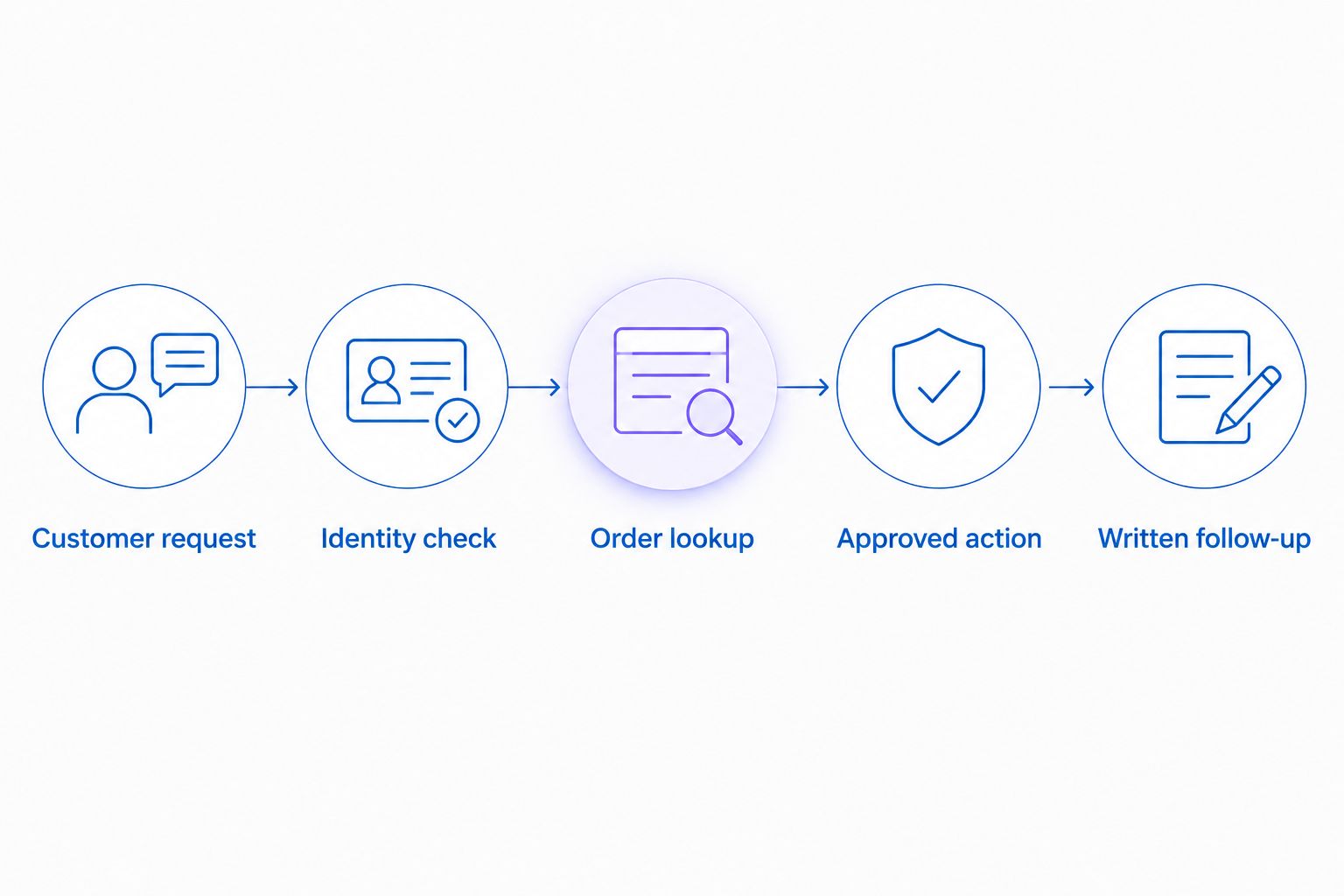
Evaluate the final customer outcome, not just the quality of the voice.
Run that sequence with an ordinary request and an exception. The ordinary request establishes whether the basic workflow works. The exception shows whether the setup respects your boundaries.
Customer request
Ask an order-tracking question through the channel the customer actually uses. For a voice requirement, make a call; for a messaging requirement, send a message. Do not accept a transcript demonstration as proof of live channel handling.
Identity check
Require verification before the workflow discloses sensitive order information or changes an order. Define your store's policy in advance so the demonstration has a clear pass or fail condition.
Order lookup
Check the answer against the Shopify order record. A fluent response is insufficient if it refers to the wrong customer, shipment or order state.
Approved action
Attempt an allowed request and a request outside the agent's authority. The workflow should complete the permitted action and route the exception according to your policy.
Written follow-up
Check that the message matches the completed action and uses an approved destination. Then reply to it. You need to know who receives that reply and how the conversation gets resolved.
Start your Shopify phone trial
Evaluate order support and cart-recovery calls during the 7-day free trial.
How these options are ranked
The ranking follows channel fit, Shopify task relevance, action control, conversation continuity and operational ownership. It is a decision guide, not a performance benchmark or a claim of hands-on testing.
The named product comes first for its stated Shopify phone-support scope. Messaging-first support ranks next for written conversations, followed by a connected stack for cross-channel journeys. Custom work is last because it needs a specific requirement and an implementation owner.
For 2026 purchasing decisions, require demonstrations of the capabilities you need. A feature label should never replace an observed result.
Which support setup should you choose?
Choose the setup that resolves your most important customer request in its actual channel. For Shopify calls and abandoned-cart outreach, start with Ava AI. For WhatsApp and SMS conversations, start with a messaging-first evaluation.
Use a connected stack when written follow-up is a necessary part of the call outcome. Reserve custom development for a documented requirement that the other approaches cannot meet.
Keep adoption reporting separate from business outcomes. Website clicks, app installs, trial starts and paid customers describe different stages. For support evaluation, record whether the request was resolved and whether the order action was correct.
FAQ
What's the best AI voice agent for WhatsApp and SMS support?
The best choice depends on whether you need telephone calls, written messages or both. Avasales fits Shopify phone support and cart-recovery calls; evaluate WhatsApp and SMS handling separately through channel-specific demonstrations.
Does a voice agent automatically support WhatsApp?
No, telephone voice capability does not establish WhatsApp support. Require separate demonstrations for WhatsApp text, voice notes and any calling workflow you need.
Is an SMS notification the same as SMS customer support?
No, an outbound notification does not demonstrate two-way support. Test incoming replies, customer identification, assignment and resolution before treating SMS as a support channel.
Can Ava AI answer Shopify customer support calls outside business hours?
Yes, Ava AI answers Shopify customer support calls 24 hours a day. Its stated scope also includes order and refund requests and outbound abandoned-cart recovery calls.
Should I choose one platform or connect voice and messaging tools?
Choose one platform only if it demonstrates every required workflow. Choose a connected stack when separate components meet your needs, then test identity, order information and handoffs across them.
How should I test an agent that handles refund requests?
Test an authorized refund request and a request outside your store's approval rules. Verify customer identity, the final Shopify order state and the response given to the customer.
What should I check before using abandoned-cart calls and text follow-up?
Check outbound-contact permissions, approved checkout destinations and the rule for stopping follow-up after purchase. Evaluate the call and written message as a single customer journey.
One last thing
Make your final test a reply to the follow-up message. A support workflow is unfinished if the customer receives a useful link but nobody owns the next question.
Use a simple response such as asking for clarification about the order. Confirm that the reply reaches the right place, retains the relevant context and gets resolved. That test exposes a gap that a voice demonstration alone cannot show.