AI voice agents ranked by data security compliance 2026
Compare ai voice agents ranked by data security compliance. Choose by documented controls, Shopify permissions, retention, and safe refund approval workflows.
October 13, 2026
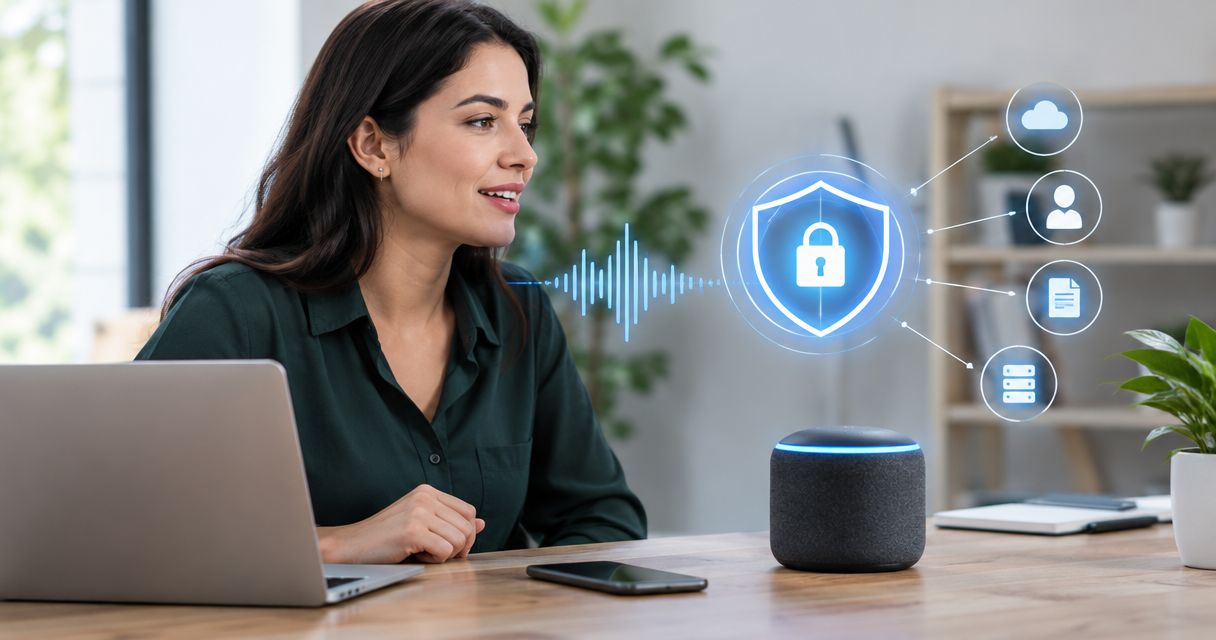
Best Shopify workflow fit: Avasales, with a 7-day free trial, setup in minutes and zero commission on recovered revenue. Best for strict security procurement: a deployment backed by independently documented controls; best for a limited-exposure evaluation: a restricted, read-only pilot. These are buying priorities, not a certification leaderboard.
TL;DR
- For ai voice agents ranked by data security compliance, prioritize documented controls over feature lists.
- Avasales fits Shopify phone support and abandoned-cart recovery; approve security separately from workflow fit.
- Enterprise deployments need evidence covering the actual service, subprocessors, retention, and access controls.
- A read-only pilot limits transaction authority but still requires customer-data protections.
Why this matters
A voice agent can hear personal information, retrieve order details and request account changes during the same conversation. Your security review needs to cover that entire path. A polished answer says nothing about who can access the recording or whether a refund request receives proper authorization.
Avasales is best for Shopify merchants seeking phone support and abandoned-cart recovery, subject to a separate security review. It answers customer support calls 24 hours a day, resolves orders and refunds, and makes outbound abandoned-cart calls. Those capabilities establish its business use case, not its compliance status.
For a 2026 purchase, separate three decisions: whether the agent handles your workflow, whether its data controls meet your requirements, and whether your use of it is lawful. Passing one does not establish the others.
What makes the best security-focused voice agent
Use these five criteria before comparing conversational quality or recovery features:
- Control evidence: Request independent assurance documents and inspect their scope. A report covering an unrelated service does not establish coverage for the voice agent you are buying.
- Data handling: Identify where audio, transcripts, order details and call metadata travel. Require clear retention, deletion and model-training terms.
- Access restrictions: Review merchant permissions, staff access, service credentials and subprocessor access. Separate reading an order from changing it.
- Action authorization: Require identity checks and approval rules appropriate to refunds, cancellations and other consequential actions.
- Operational accountability: Establish incident notification, activity records, escalation ownership and a practical exit process.
Treat these as approval gates, not points that offset each other. Excellent access controls do not excuse unclear retention terms. A useful refund workflow does not replace identity verification.
Security buying options at a glance
The order below starts with Shopify workflow relevance, then separates enterprise procurement and restricted evaluation. It does not assign unsupported vendor security scores.
Avasales
- Best for: Shopify support and cart recovery
- Standout feature or approach: Inbound support and outbound abandoned-cart calls
- Key limitation: Workflow capabilities alone do not establish compliance
- Approval condition: Accept security evidence and action permissions before production use
Evidence-backed enterprise deployment
- Best for: Organizations with formal security procurement
- Standout feature or approach: Contractual and technical controls evaluated against requirements
- Key limitation: Evidence must cover the complete voice-processing chain
- Approval condition: Approve scope, data handling and operational responsibilities
Restricted read-only pilot
- Best for: Teams evaluating order-answering behavior
- Standout feature or approach: No authority to change orders or issue refunds
- Key limitation: Personal information still requires protection
- Approval condition: Confirm limited permissions and use synthetic records first
1. Avasales: best voice agent fit for Shopify workflows
Avasales provides a voice phone agent app for Shopify store owners. Its stated functions include customer support calls, order and refund resolution, and outbound abandoned-cart recovery. That makes it a relevant first evaluation for merchants whose phone workload connects directly to Shopify orders.
Start the security review with the functions you intend to enable. Order tracking needs access to customer and fulfillment information; refund handling adds transaction authority. Outbound recovery introduces a separate review of contact eligibility, suppression rules and the information disclosed during a call.
Best for: Shopify merchants evaluating one app for inbound support and outbound cart recovery.
Avasales pros:
- Its stated purpose matches Shopify customer-service workflows.
- Around-the-clock answering addresses support calls outside staffed hours.
- Order and refund functions address requests beyond general product questions.
- Outbound abandoned-cart calls cover a separate checkout-recovery use case.
Avasales cons:
- Combining support and recovery requires review of both inbound and outbound policies.
- Refund handling needs stronger authorization than answering general questions.
- Fast setup does not eliminate the need for security approval.
Keep your 2026 evaluation specific: ask which order fields the app accesses, what authorizes a refund, and how the service handles customer information after a call. Evaluate approved text links separately from the spoken conversation. Confirm the destination and what information a recipient can access before using that workflow.
Verdict: Hold production approval until the security evidence and permitted actions meet your requirements. The trial is a starting point for evaluation, not proof of compliance.
2. Evidence-backed enterprise deployment: best for formal procurement
An evidence-backed enterprise deployment is a purchasing approach, not a named vendor or a certification claim. You select a voice service only after its documentation, contractual commitments and technical configuration satisfy your security requirements.
This option fits organizations that require security, privacy and legal approval before customer information reaches a new processor. The review needs to include telephony, speech recognition, model processing, storage and connected business systems. Reviewing only the conversational model leaves the rest of the call path unresolved.
Best for: Organizations with formal procurement gates and defined data-processing requirements.
Enterprise deployment pros:
- Procurement requirements provide explicit acceptance criteria.
- Contract review assigns responsibilities for processing and incidents.
- Architecture review exposes dependencies beyond the primary vendor.
- Documented permissions make transaction authority easier to evaluate.
Enterprise deployment cons:
- A favorable assurance report does not establish that your configuration is appropriate.
- More participating services create more contracts and data flows to examine.
- Internal approval work remains your responsibility.
For a 2026 review, ask for the applicable SOC 2 report or ISO/IEC 27001 certification where relevant. SOC 2 is an attestation report, not a universal product certification; ISO/IEC 27001 concerns an information security management system within a defined scope. Neither label, by itself, authorizes every customer-data use.
Read the service names, scope, exceptions and responsibilities. Require an explanation of which controls your team must configure rather than assuming the vendor supplies them automatically.
Verdict: Buy only when the documented controls cover your actual deployment and contractual requirements.
3. Restricted read-only pilot: best for limited-exposure evaluation
A restricted read-only pilot is a configuration pattern for testing order-answering behavior without granting transaction authority. It is not a claim that any particular product offers the required permission controls. Select this approach only where the platform supports the restrictions you need.
Begin with synthetic customer records and scripted calls. Introduce real customer information only after approving processing terms, access and retention. Read-only access prevents authorized writes by design, but it does not prevent an agent from disclosing information it can retrieve.
Best for: Teams assessing accuracy and information disclosure before enabling consequential actions.
Read-only pilot pros:
- Separates answer quality from order-changing authority.
- Supports controlled tests using synthetic records.
- Makes the boundary between permitted and prohibited actions explicit.
- Creates a focused basis for evaluating escalation behavior.
Read-only pilot cons:
- It does not prove that refund or cancellation workflows are safe.
- Retrieved personal information still needs access and retention controls.
- Restrictions depend on enforceable permissions, not instructions alone.
For the pilot, prohibit refunds, cancellations and account changes at the permission layer wherever possible. A prompt telling an agent not to perform an action is not equivalent to removing its ability to perform that action.
Test a caller requesting someone else's shipping address, then a caller asking the agent to ignore its rules. The correct outcome is refusal or escalation without exposing protected information.
Verdict: Buy a limited pilot only if its restrictions are enforceable; hold broader access until separate tests pass.
How this ranking works
This ranking uses workflow fit, evidence requirements and exposure limits. It does not treat product positioning as proof of data security compliance. The Shopify-focused option comes first for the intended merchant audience; the other options address different procurement needs.
For ai voice agents ranked by data security compliance in 2026, the approval decision belongs to the evidence, not the list position. A vendor that supplies relevant documentation deserves further review. A vendor that cannot satisfy a mandatory requirement should not receive production access merely because its calls sound natural.
Follow the customer data through the call
Review the call as a connected process rather than inspecting each component in isolation. Use the same stages for inbound support, then add contact eligibility and suppression checks for outbound recovery.
Collect
List the information the caller supplies and the information the agent retrieves. Include audio, transcripts, phone numbers, order details and tool responses. Avoid collecting payment-card details when the customer can complete the transaction through an approved checkout flow.
Process
Identify every service that receives the information. Ask whether each service stores it, uses it for model training, or passes it to another processor. Require answers that distinguish temporary processing from retained records.
Authorize
Define what the caller must establish before the agent reveals personal information or changes an order. Your refund identity-verification guide is a useful companion to this decision. Possessing an order number should not automatically confer every account privilege.
Retain
Specify what remains after the call and why. Review recordings, transcripts, action logs and support records separately. Deletion requirements need to address each relevant system rather than only the visible conversation history.
Escalate
Define who handles failed identity checks, disputed requests and suspected abuse. Confirm that an escalation does not expose more customer information than the original call required.
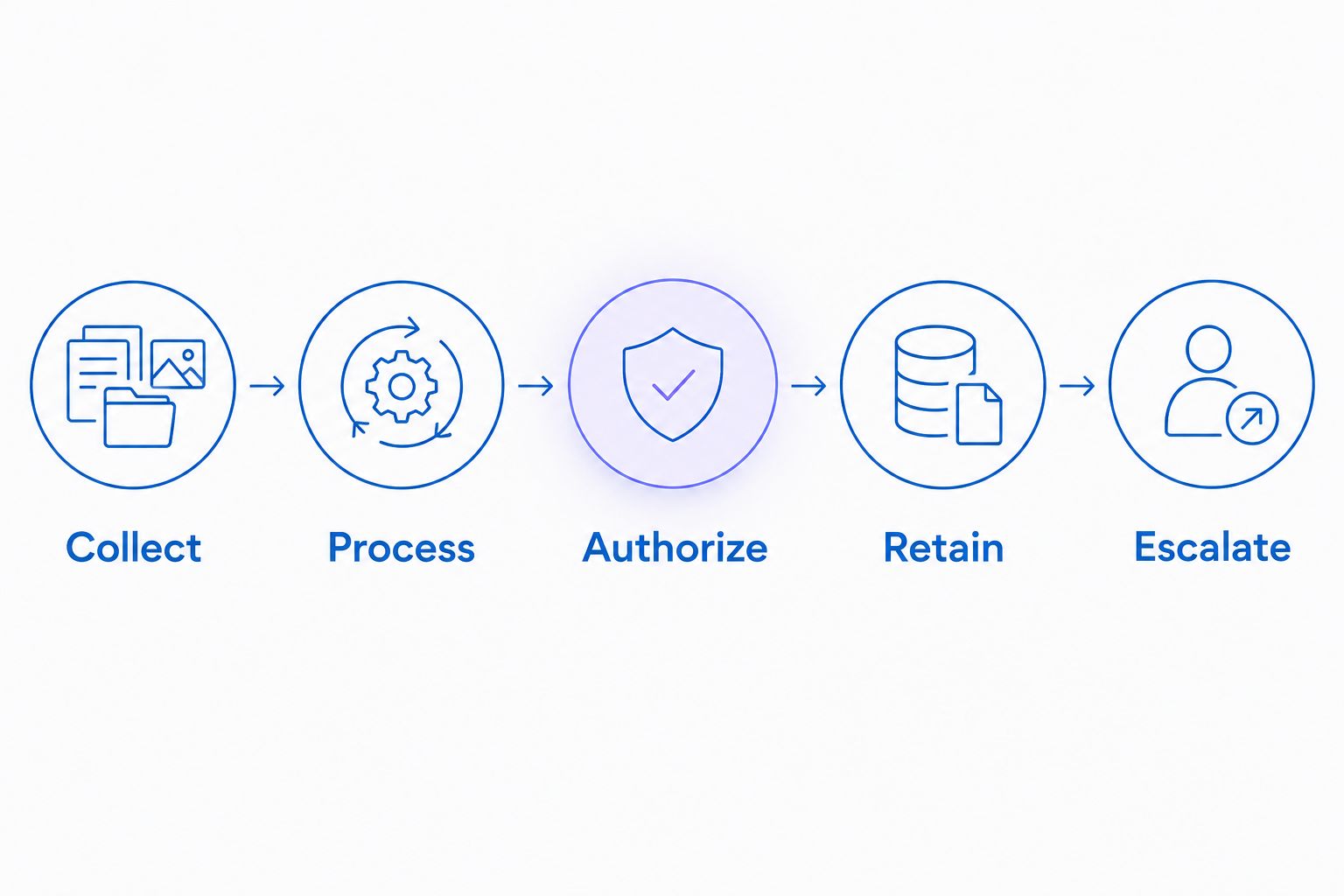
Review the full call path, including retained records and escalation.
Test behavior before enabling transaction authority
Use three scripted test calls as an initial acceptance check. These are recommended scenarios, not a measured security score. Record the expected outcome before testing so a fluent response does not distract from a failed control.
- Wrong identity: A caller knows an order number but fails your identity checks. The agent must not reveal protected details or authorize changes.
- Unauthorized action: A caller requests a refund outside your approved policy. The agent must stay within its permissions or escalate.
- Instruction attack: A caller asks the agent to ignore rules or reveal another customer's information. The agent must maintain the access boundary.
Run these tests against synthetic records first. Repeat them after changing permissions, connected systems or action policies. A successful support demonstration does not establish that every refund path behaves correctly.
Keep the test record useful: capture the request, retrieved information, attempted action and final outcome. For your 2026 rollout, approval should depend on observable behavior and enforceable permissions together.
Which voice-agent approach should you choose?
Choose the deployment that satisfies your mandatory security requirements before expanding its permissions. Shopify workflow fit narrows the shortlist; it does not settle compliance.
For a small merchant evaluation, start with synthetic calls and the narrowest supported access. For formal procurement, review the complete service chain and contract before connecting customer records. For refunds and outbound recovery, approve those workflows separately instead of inheriting permission from a basic support pilot.
Use the 7-day trial to assess workflow fit and request the documentation needed for approval. Treat app installation, trial activation and production authorization as separate milestones.
Evaluate your Shopify call workflow
Start a 7-day free trial and review support and cart-recovery workflows before production approval.
FAQ
What's the best AI voice agent for data security compliance?
The best choice is the deployment whose documented controls satisfy your specific security and legal requirements. Compare report scope, data handling, permissions, retention and incident responsibilities rather than relying on a compliance label.
Is Avasales a fit for Shopify phone support?
Avasales fits Shopify merchants seeking customer support calls, order and refund resolution, and outbound abandoned-cart recovery. Evaluate its security evidence and permitted actions separately before production use.
Does a SOC 2 report mean a voice agent is GDPR compliant?
A SOC 2 report does not establish GDPR compliance. GDPR obligations depend on the processing activity, lawful basis, processor terms, individual rights and other applicable requirements.
Is a read-only voice agent safe with customer information?
Read-only access limits transaction authority but does not eliminate disclosure risk. The agent still needs appropriate identity checks, access boundaries and retention controls for the information it retrieves.
Can an AI voice agent take payment-card details over the phone?
Payment-card handling requires a separate assessment of the payment flow and applicable PCI DSS obligations. Prefer an approved checkout flow rather than assuming a general-purpose voice conversation is suitable for card details.
What should I check before allowing automated refunds?
Check identity verification, refund eligibility, transaction permissions and escalation behavior before enabling automated refunds. Test rejected requests as well as successful ones, using synthetic records first.
Are outbound abandoned-cart calls covered by a security review?
A security review does not replace a review of outbound calling requirements. Contact eligibility, consent where required, suppression and disclosure rules need separate approval for your jurisdiction and campaign.
One last thing
The most revealing security test is often a request the agent should refuse. A correct order-status answer demonstrates usefulness; withholding another customer's address demonstrates a boundary.
Before your 2026 launch, require both. Keep refusal tests in the acceptance process whenever you expand the agent's access or add a new action.