Can an AI phone agent manage calls during a product recall?
Use ai phone agent product recall calls for approved instructions and intake. Learn when to transfer callers, verify records, and keep safety decisions human.
November 12, 2026
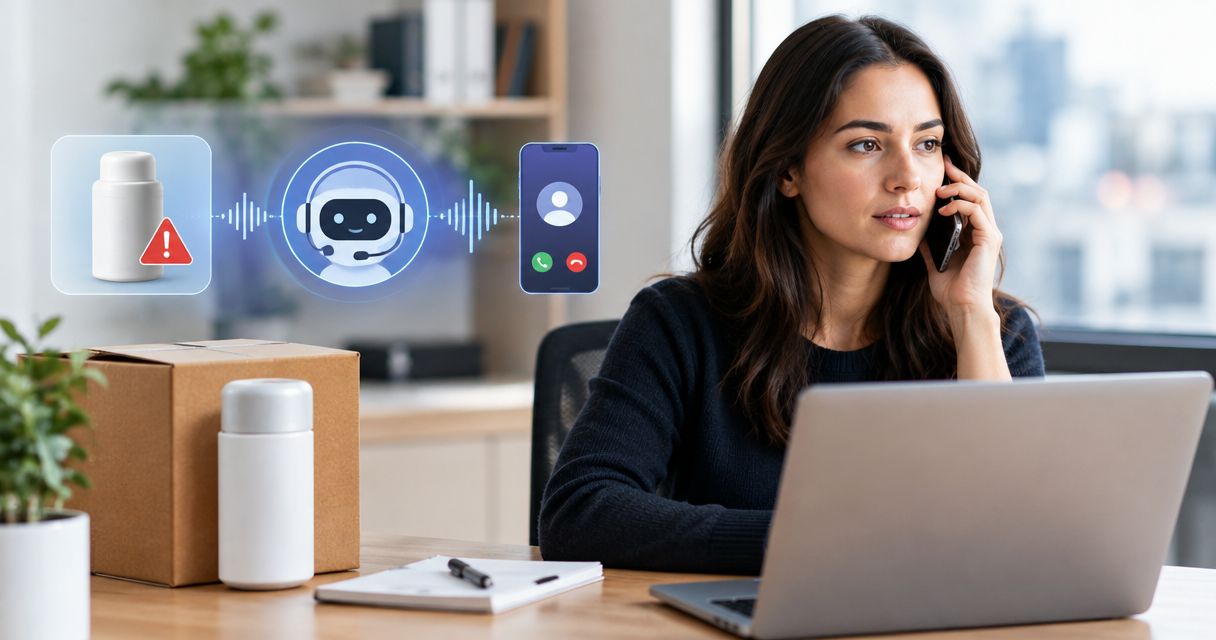
Yes, an AI phone agent can manage routine calls during a product recall when it follows approved instructions, checks relevant records, and routes exceptions to a responsible human. Keep injury reports, uncertain product matches, and decisions outside the published recall process out of autonomous handling; answering a call does not mean resolving the recall case.
TL;DR
- For AI phone agent product recall calls, automate approved information and intake, not safety judgments.
- Shopify order records help identify purchases; they do not always establish whether a physical item is affected.
- Avasales provides Shopify phone support; confirm recall-specific controls before assigning safety-sensitive calls.
- Require human escalation for injury reports, unclear product identifiers, and exceptions to approved remedies.
Why this matters
A recall caller needs the correct instructions for the product they actually own. A fluent answer about the wrong item creates a more serious problem than an unanswered routine support question. Your 2026 recall plan should prioritize accurate identification, approved wording, and accountable follow-through.
Avasales offers a 7-day free trial, setup in minutes, and zero commission on recovered revenue. Its Shopify phone support includes answering customer calls 24/7 and handling orders and refunds. Those general support capabilities do not establish recall readiness: evaluate the exact recall workflow before assigning it safety-sensitive work.
Can an AI phone agent manage calls during a product recall?
Use an AI phone agent for bounded recall intake and approved answers, with a named human owner for exceptions. Treat the following as deployment requirements, not capabilities you should assume every phone app includes.
- Approve instructions. Give the agent the current recall notice, affected-product identifiers, permitted remedies, and escalation rules. Exclude superseded guidance from the active answer source.
- Identify the item. Ask for the identifiers specified in the recall notice. Use order information as supporting evidence rather than a substitute for a required lot, batch, or serial number.
- Explain next steps. Read the approved action for a confirmed match. Do not generate alternative disposal, repair, shipping, or continued-use instructions.
- Record the outcome. Separate information provided, customer action requested, remedy initiated, and remedy completed. A spoken promise is not a completed refund or replacement.
- Escalate exceptions. Route uncertain matches, injury reports, disputed remedies, and requests outside the approved process to a responsible person.
Make each step pass a practical test before launch. If the system cannot preserve the distinction between a confirmed match and an uncertain match, restrict it to intake and human routing.
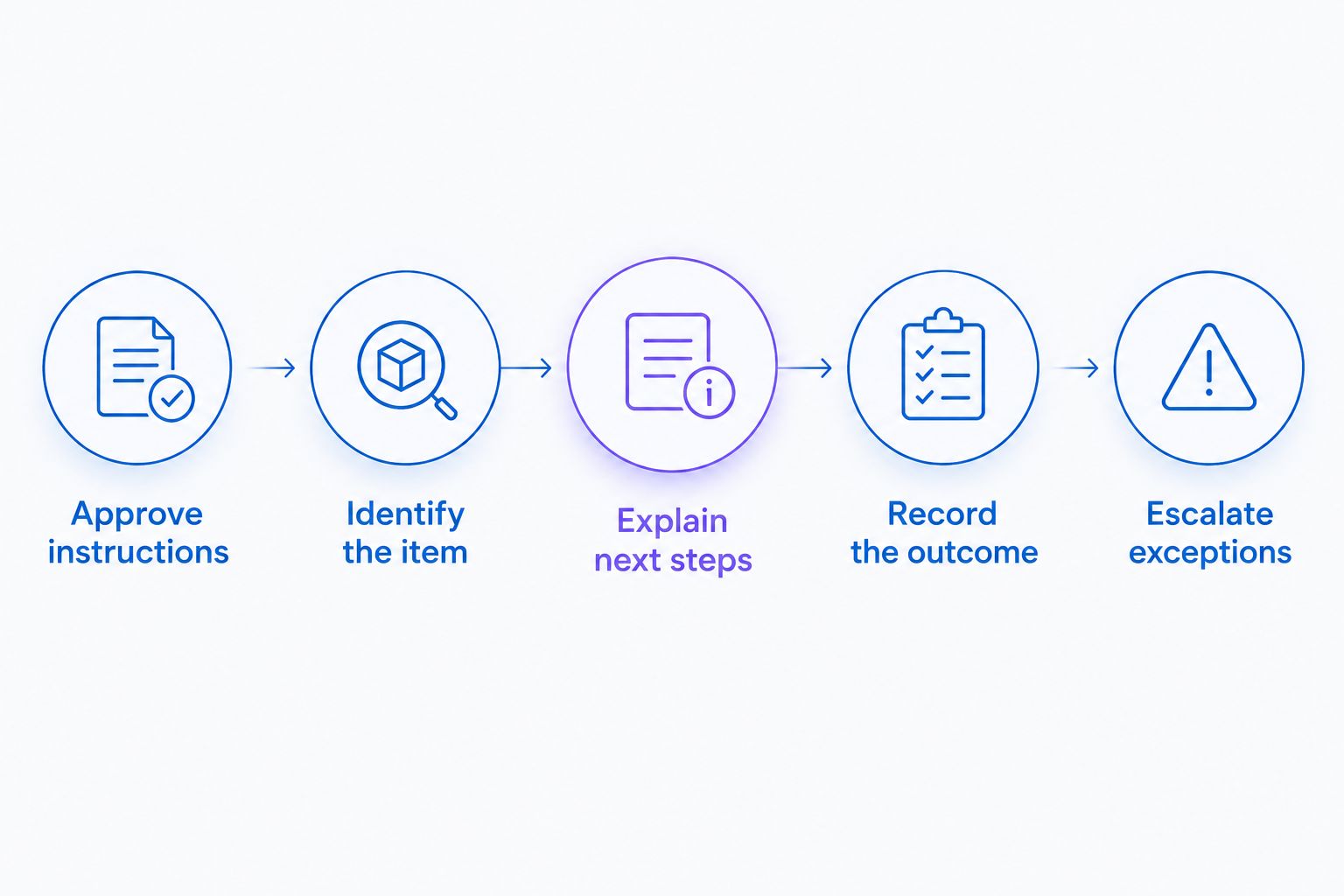
Uncertain cases need an escalation path rather than an improvised answer.
Which parts of recall calling should you automate?
Choose the handling model by the decisions a caller needs, not by whether the agent sounds natural. For a 2026 deployment, the table below provides a practical boundary between repetitive support and case-specific judgment.
Automated information and intake
- Best for: Repeating approved instructions and collecting required details
- Benefit: Keeps routine answers tied to the same source
- Limitation: Cannot resolve an exception without an approved path
Human-led handling
- Best for: Injury reports, disputed eligibility, and unclear product identity
- Benefit: Assigns judgment to an accountable person
- Limitation: Requires staffed coverage and a fallback when unavailable
Combined handling
- Best for: Routine intake followed by specialist review where needed
- Benefit: Preserves context while separating routine work from judgment
- Limitation: Depends on reliable records and a tested transfer process
Start with combined handling when recall questions include both routine instructions and unresolved exceptions. Automation alone is a poor choice when the workflow requires decisions that the approved notice does not answer. Human-only handling also needs documented instructions; staffing does not remove the risk of inconsistent advice.
Routine information: keep the answer inside the notice
Allow the agent to repeat the affected identifiers, explain how customers can locate them, and describe the published next step. Every answer should trace back to the active recall instructions.
If a customer asks whether an unfamiliar symptom proves their product is defective, stop the automated answer path. Do not let a general support response become a diagnosis or an unsupported assurance of safety.
Case-specific decisions: assign a human owner
Reserve ambiguous eligibility, exceptions, and safety-sensitive reports for the designated recall team. The person receiving the case needs the product identifier, the caller's concern, and the unresolved decision.
A transfer without context makes the customer repeat the problem. A case note without an owner leaves the problem waiting. Require both ownership and context in the escalation design.
Why recall-call handling varies
The right automation boundary depends on your actual recall instructions and the records available during the call. Evaluate these factors before selecting the tasks an agent will handle:
- Product identification: Determine whether eligibility depends on an item name, model, lot, batch, serial number, or another identifier in the notice.
- Available records: Establish which purchase details the agent can access and which details the customer must read from the physical item.
- Approved remedies: Specify the exact conditions for each permitted action. Ordinary return rules are not a substitute for recall instructions.
- Escalation coverage: Identify who accepts urgent and unresolved cases, including when the usual team is unavailable.
- Change control: Decide who approves revised instructions and how you prevent older wording from remaining active.
Document the answer to each factor in the call workflow. Do not fill gaps with instructions inferred from a similar product, a previous recall, or a general returns policy.
How should you identify affected Shopify orders?
Start with the affected-product criteria in the approved notice, then determine whether your Shopify records contain those criteria. An order can establish that someone bought a product without establishing which production batch they received.
Ask the customer to read the required identifier from the location described in the notice. Repeat it back before matching it. If the identifier is missing, unreadable, or inconsistent with the order, record the uncertainty and route the case for review.
For your 2026 workflow, define what happens when a buyer received the item as a gift or purchased through a different channel. Do not automatically reject a caller because the phone number does not match a Shopify customer record. Follow the approved eligibility and identity-verification process instead.
Before disclosing purchase details or initiating a remedy, apply the verification rules approved for that action. Collect only the information needed for the recall task. Never ask callers to disclose passwords or full payment-card details to establish ownership.
What should happen when a caller reports an injury?
Move an injury report out of routine automated resolution. The agent should follow the approved urgent-response wording and escalation process, without diagnosing the injury, assessing liability, or promising an outcome.
Define the destination before enabling this call path. Test whether calls can transfer to a human when needed, what information accompanies the transfer, and what happens if nobody answers. Do not describe a callback as a live transfer.
Where the approved response directs a caller to emergency services or another urgent channel, preserve that wording. A support queue is not a replacement for emergency assistance. Your recall owner should approve how the agent handles interrupted calls and incomplete reports.
How do you prevent unsupported answers during recall calls?
Give the agent a narrow answer source and explicit stop conditions. A general store knowledge base contains material written for ordinary shopping and support; recall handling requires instructions approved for the specific affected product.
The practical question behind AI safety in regulated industries is which decisions the system is permitted to make and who remains accountable when it reaches that boundary. For recall calls, apply that principle by separating information delivery from safety judgments and exception approval.
Use an instruction owner, a version identifier, and an effective date for your 2026 recall materials. Require review when the notice, affected identifiers, or remedy changes. Make the system stop using superseded instructions rather than appending new guidance to conflicting old text.
Review unsupported questions as a separate category. If customers repeatedly ask something the notice does not answer, send that question to the recall owner for an approved response. Repetition does not make an improvised answer acceptable.
Can the agent issue refunds or send follow-up instructions?
Only authorize a refund when the recall workflow explicitly permits it and the connected system can enforce the required checks. An app's ordinary refund function does not establish that it can apply recall-specific eligibility or prevent duplicate remedies.
Require the call record to distinguish a requested refund from a confirmed transaction. If the transaction fails, preserve that status and assign follow-up. Do not let the agent tell a caller that money has been returned merely because it submitted a request.
Use follow-up text links only through an approved messaging process. Confirm the destination, use the approved recall content, and avoid including unnecessary personal information. A message marked as sent is not evidence that the customer read or followed it.
Keep sales activity out of the recall conversation. Do not introduce cart recovery, upselling, or promotional offers while a caller is trying to resolve a product-safety concern. The immediate task is accurate recall support.
What should you test before enabling recall calls?
Use a written acceptance checklist for the 2026 launch. Test ordinary calls alongside difficult cases, including incomplete identifiers, conflicting records, interrupted conversations, and unavailable human support.
- Confirmed match: The agent repeats the identifier accurately and gives only the approved next step.
- Uncertain match: The agent records uncertainty without declaring the item safe or affected.
- Injury report: The agent follows the urgent escalation instructions without continuing routine troubleshooting.
- Failed action: The agent reports a failed refund or transfer accurately and creates the required follow-up.
- Updated notice: The agent uses the active instructions and no longer repeats superseded wording.
- Unanswered question: The agent declines to invent an answer and assigns the question for review.
Review the resulting records, not just the sound of the calls. A successful demonstration needs correct identifiers, accurate outcomes, and an owner for every unresolved case. Set acceptance criteria before testing so a polished conversation cannot substitute for a functioning process.
Avasales is best suited to Shopify merchants seeking routine phone support; recall use requires separate workflow validation. Treat its general support scope as the starting point for evaluation, not proof of recall-specific safeguards.
FAQ
Can an AI phone agent handle every call during a product recall?
No. Limit automated handling to approved information and bounded tasks, and assign injury reports, unclear identifiers, and exceptions to a responsible human.
Can Shopify order data tell me whether a product is recalled?
Shopify order data can support identification, but it does not always establish whether the physical item meets the recall criteria. Use the identifiers required by the approved notice, including physical-item details when necessary.
Should an AI phone agent tell customers to stop using a product?
The agent should repeat the approved recall instructions about product use. It should not invent continued-use advice, repair steps, disposal methods, or alternative safety instructions.
Can an AI phone agent automatically refund a recalled order?
Authorize an automated refund only when the recall process permits it and the system can enforce the required checks. Record a refund as completed only after the transaction is confirmed.
What happens if the recall support team does not answer a transfer?
Use a predefined fallback with an assigned owner and an accurate status for the caller. Do not represent an unanswered transfer or callback request as completed human assistance.
Can an AI phone agent send a recall link after the call?
Send a recall link only through an approved messaging workflow using the correct destination and content. Keep the message focused on the recall and avoid unnecessary personal information.
Does Avasales provide phone support around the clock?
Avasales provides Shopify customer phone support 24/7, including order and refund support. Confirm the recall-specific identification, escalation, and instruction controls before using it for recall calls.
One last thing
A completed call is not a completed recall remedy. Track information delivered, eligibility unresolved, remedy initiated, remedy completed, and follow-up required as distinct outcomes. Review open cases by owner so an orderly call log does not conceal customers still waiting for action.