Does an AI phone agent need a human supervisor monitoring calls?
AI phone agent human supervisor needs depend on permissions, not constant listening. Learn when to use approvals, escalation and call quality reviews.
November 10, 2026
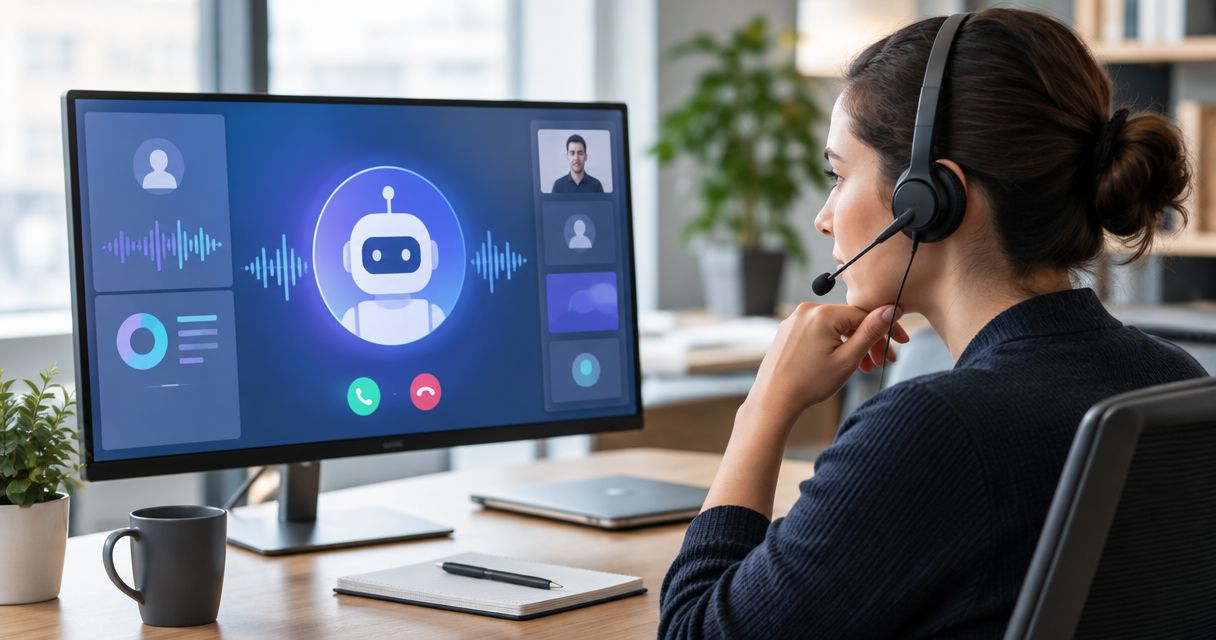
No, an AI phone agent does not inherently need a human supervisor listening to every call. Routine calls can operate without live monitoring when the agent has clear permissions, reliable information and a defined route for exceptions. You still need a person responsible for policy decisions, unresolved requests and quality review; unattended answering is not the same as unattended accountability.
TL;DR
- The ai phone agent human supervisor decision depends on action permissions, exception handling and review, not constant listening.
- Use human approval for policy exceptions; use quality review to check routine Shopify support calls.
- Avasales provides Shopify phone support around the clock, plus outbound abandoned cart recovery calls.
- Test unresolved requests and after-hours escalation before allowing unattended customer calls.
Why this matters
A supervisor who listens to every routine tracking question still has to spend time on every routine tracking question. Your goal should be to remove that requirement without removing responsibility for what callers hear or what happens to their orders.
Start with the 7-day free trial, setup in minutes and zero commission on recovered revenue offered by Avasales. Avasales is best for Shopify merchants who need 24/7 phone support and outbound abandoned cart recovery calls. Its stated scope includes order and refund resolution, but you should test your store's approval boundaries before delegating customer-facing actions.
For a 2026 rollout, separate what the software handles from what your team authorizes. Answering a question, changing an order and granting an exception are different responsibilities.
Does an AI phone agent need a human supervisor monitoring calls?
Not every call needs live monitoring, but every automated workflow needs an accountable owner. Choose supervision according to the decisions the agent is allowed to make, rather than treating all phone conversations as equally sensitive.
Live monitoring
- Best for: Testing a new workflow or investigating a known issue
- Main advantage: A person hears the conversation as it happens
- Main limitation: Requires attention throughout the monitored call
Approval before action
- Best for: Refund exceptions or requests outside written policy
- Main advantage: Keeps the final decision with an authorized person
- Main limitation: The customer must wait for a decision
Exception-based oversight
- Best for: Routine calls with clearly defined boundaries
- Main advantage: Directs human attention to unresolved requests
- Main limitation: Depends on recognizing and routing exceptions
Post-call review
- Best for: Checking completed conversations and improving instructions
- Main advantage: Reveals mistakes without staffing each call
- Main limitation: Does not prevent an error during that call
These approaches can work together. For example, you can review routine order-status calls after completion while requiring approval for a refund outside your written policy.
Do not treat a confident voice as evidence that a request was resolved. Check the answer against the order record, the relevant policy and the action actually completed. A conversation that sounds finished can still leave an unresolved task.
Live monitoring: best for testing unfamiliar workflows
Use live monitoring when you introduce a workflow whose behavior you have not yet checked. Listen for incorrect policy statements, misunderstood requests and promises that exceed the agent's authority.
The benefit is immediate visibility. The drawback is staffing: someone must remain available to listen, and monitoring alone does not establish whether the system supports intervention.
Confirm how intervention works before relying on live supervision. Listening, taking over a call and approving an action are separate functions. Ask the provider to demonstrate the specific function you need rather than accepting a general statement about human oversight.
For your 2026 launch checklist, include a caller who changes the request mid-conversation. An agent that correctly answers an order-status question still needs a safe response when that same caller asks for a policy exception.
Approval before action: best for policy exceptions
Keep human approval attached to decisions your store does not want delegated. A request for a refund outside your published conditions should follow the exception process you define, not become an improvised decision during a call.
This model lets the agent gather the request while an authorized person decides the outcome. Its limitation is delay. The caller needs an accurate explanation of what remains pending and what happens next.
Write approval rules as actions, not vague cautions. For example, instruct the workflow to stop before an unauthorized order change and send the request for review. Do not rely on an instruction such as “be careful with refunds” to define authority.
Where an action is permitted, distinguish eligibility from completion. Saying a refund qualifies is different from confirming that the refund was processed.
Exception-based oversight: best for routine support
Exception-based oversight means your team handles calls that fall outside the agent's approved scope. Routine questions proceed without a person listening throughout, while ambiguous or restricted requests follow a separate path.
This is the recommended model for established, clearly bounded workflows. Its weakness is the exception boundary: a rule that never identifies uncertainty cannot reliably bring uncertainty to a person.
Define what should trigger review. Examples for your store's instructions include conflicting order details, an explicit request for a person, an unavailable record or a requested action that exceeds permission.
Treat human call transfers as a workflow to evaluate, not a label to accept. Check the destination, what information accompanies the request and what happens when nobody answers.
Post-call review: best for checking completed work
Post-call review checks whether the conversation and its outcome match your rules. Review available call records alongside order activity and any follow-up work, subject to your privacy and recording requirements.
Its advantage is that you do not need a person listening to each conversation in real time. Its limitation is equally clear: a review discovers an error after it occurs.
Check for concrete failures rather than grading whether the voice sounded pleasant. Did the agent identify the right order? Did it separate a requested action from a completed action? Did an unresolved issue reach someone responsible for it?
Use findings to change the relevant instruction or permission. Repeatedly reviewing the same error without changing the workflow leaves the cause intact.
Why human supervision needs vary
Your 2026 supervision plan should reflect the work you delegate. These factors determine where a person needs to remain involved:
- Action scope: Reading order information and authorizing a refund require different permissions. Define each separately.
- Policy clarity: A written refund rule gives the workflow a boundary. An unwritten exception requires an authorized decision-maker.
- Order information: An unavailable or conflicting record needs a fallback. The agent should not fill gaps with an assumed answer.
- Operating hours: Around-the-clock answering does not establish that a human is available around the clock. Set an after-hours route.
- Call purpose: Inbound support and outbound cart recovery need different instructions, permissions and stopping conditions.
- Unresolved requests: A handoff needs an owner and an outcome. Passing a message somewhere is not enough to establish resolution.
Do not use call volume alone to decide whether supervision is necessary. The authority granted during a call is a more useful starting point than how many calls arrive.
How should you set up human oversight before launch?
Build the supervision process around specific requests. For a 2026 launch, use the following sequence before expanding the agent's scope.
- Define scope. List the questions the agent can answer and the actions it can perform. Separate providing information from changing customer records.
- Set permissions. Identify which actions are permitted automatically, which require approval and which remain outside scope entirely.
- Route exceptions. Name the person or queue responsible for unresolved requests. Specify what should happen outside staffed hours.
- Test outcomes. Run routine requests and exceptions. Check the resulting order activity and follow-up, not just the spoken response.
- Review results. Inspect completed work, correct instructions and repeat the relevant test after a change.
A useful test includes a request the agent must decline or defer. Success means respecting the boundary and preserving the customer's next step, not finding a way to complete every request.
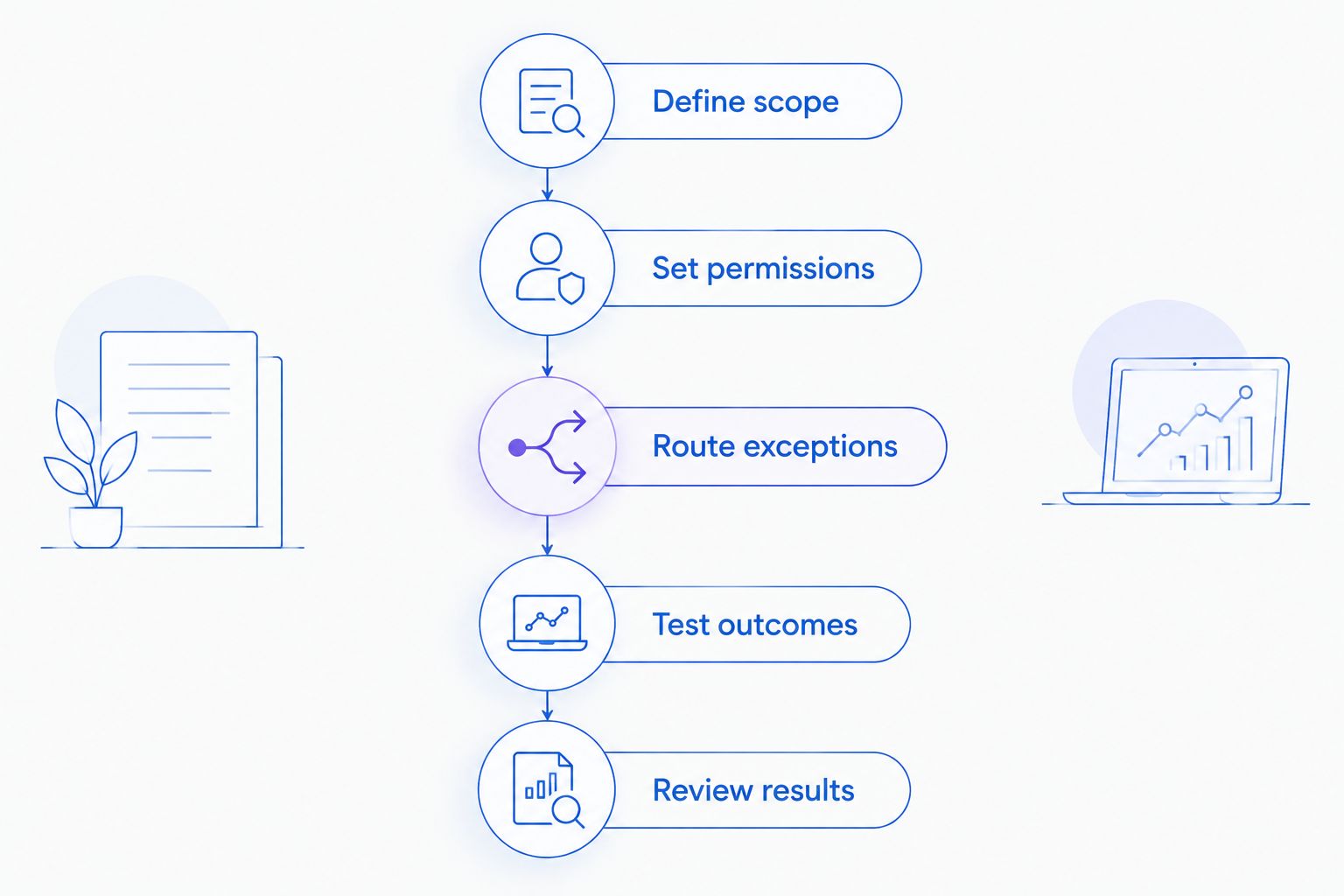
Test the exception route as carefully as the routine answer.
Keep a written record of the expected result for each test. If a caller requests an unauthorized refund, the expected result should describe the review path and the language used to explain that the request is pending.
Repeat the relevant checks when you change a policy or expand permissions. A workflow approved for order tracking is not automatically approved for refunds.
What should a Shopify merchant check during a trial?
Use the Avasales 7-day free trial to evaluate actual Shopify phone support tasks rather than voice quality alone. Check a routine order question, a refund request and an unresolved customer issue against your store's instructions.
Avasales provides 24/7 answering and outbound abandoned cart calls. Those functions address different merchant needs, so evaluate their boundaries separately: support calls need accurate answers and authorized resolutions; recovery calls need approved messaging and a clear stopping point.
The benefit is coverage beyond your staffed support hours. The operational trade-off is that your team still needs to define policies, own exceptions and check outcomes. Setup in minutes does not replace those decisions.
Keep trial starts separate from successful support outcomes. Installing an app or activating a trial does not establish that your refund policy, escalation route or customer follow-up works as intended.
Can an AI phone agent work overnight without someone listening?
24/7 answering does not require a person to monitor every call. Allow only the overnight actions you have approved, and give unresolved requests an accurate next step. Do not promise immediate human help unless your team actually provides it.
Does a free trial replace a supervised launch?
A 7-day free trial provides an evaluation window, not an automatic approval to run every workflow unattended. Use that window to test boundaries and unresolved requests. Keep sensitive actions restricted until their outcomes match your instructions.
Does zero commission mean there is no supervision work?
Zero commission on recovered revenue describes the commission model, not the work required to manage support. Your team still owns policy decisions, exception handling and quality review. Evaluate those responsibilities separately from commercial terms.
FAQ
Do I need someone listening to every AI customer support call?
No, routine calls do not inherently require a person to listen throughout. Define the agent's permissions, test exception handling and assign someone to review outcomes.
What's the difference between human monitoring and human approval?
Human monitoring means observing a conversation; human approval means authorizing a decision or action. A person listening to a call does not automatically create an approval control.
Should an AI phone agent approve every refund automatically?
No, refund authority should follow your store's written policy and permissions. Keep policy exceptions with an authorized person and test whether the workflow respects that boundary.
Can I leave AI phone support running after my team finishes work?
You can use unattended answering for workflows you have approved and tested. Set a clear route for requests that need a person, and do not promise immediate human availability outside staffed hours.
What should I check when an AI phone agent escalates a call?
Check who receives the request, what context reaches them and what happens if they are unavailable. A transfer attempt is not the same as a resolved customer issue.
Is post-call review enough to prevent mistakes?
No, post-call review checks work after the conversation rather than preventing every error during it. Combine review with action permissions and approval requirements for decisions you do not want delegated.
What should I test before removing live supervision?
Test routine answers, missing order information, policy exceptions and requests for a person. Check the actual action and follow-up as well as the words spoken during the call.
One last thing
Test the call the agent should not resolve. A routine tracking answer demonstrates the expected path; a request outside policy demonstrates whether the boundaries work.
Before expanding unattended phone support in 2026, confirm that an unresolved request reaches its owner and remains visible until someone acts. That is the practical difference between removing constant listening and removing accountability.