Can AI phone agents detect fraudulent order requests?
Can AI phone agents detect fraud? They can flag suspicious requests with the right checks. Learn how to verify callers and protect Shopify order changes.
November 5, 2026

AI phone agents can flag potentially fraudulent order requests when their workflow checks caller claims against order records and applies verification rules. They cannot establish that a caller is legitimate from a convincing conversation alone. For Shopify stores in 2026, the safe approach is to separate answering questions from authorizing refunds, cancellations, or delivery changes.
TL;DR
- AI phone agents detect fraud signals through verification workflows, not conversational confidence.
- Shopify order details help assess requests, but knowing an order number does not prove ownership.
- Avasales supports Shopify phone service; evaluate fraud controls separately from its support capabilities.
- Require verification before sensitive changes and route unresolved requests to human review.
For Shopify phone support, Avasales offers a 7-day free trial, setup in minutes, and zero commission on recovered revenue. Use the trial to evaluate routine support alongside the safeguards your store requires before allowing sensitive order actions.
Can AI phone agents detect fraudulent order requests?
An AI phone agent can support fraud screening, but a flagged request is not a proven fraud case. Its usefulness depends on the records it can access, the verification process you configure, and the actions it is permitted to execute.
Separate these responsibilities when evaluating a phone-support workflow:
Conversation screening
- Best for: Identifying requests needing closer review
- Strength: Captures what the caller wants and flags conflicts with policy
- Limitation: A plausible explanation does not establish identity
Order-record checks
- Best for: Comparing claims with recorded facts
- Strength: Grounds the conversation in actual order information
- Limitation: Order knowledge alone does not prove authorization
Independent verification
- Best for: Checking control of an established customer channel
- Strength: Adds evidence beyond what the caller says
- Limitation: Verification must remain separate from caller-supplied replacement details
Human review
- Best for: Resolving exceptions and disputed requests
- Strength: Lets an authorized person assess context and approve exceptions
- Limitation: Requires staff availability and a documented decision process
These are workflow options, not confirmed features of every phone agent. Ask a vendor to demonstrate the controls you need rather than treating fluent speech as evidence of secure execution.
Why this matters
A support call can change more than a customer's understanding of an order. A refund moves money, a cancellation affects fulfillment, and an address change redirects goods. Your authorization rules should reflect those consequences.
The caller's ability to describe a purchase is useful context, but it is not sufficient permission to modify it. Someone requesting an ordinary tracking update and someone requesting a new refund destination should not pass through an identical approval path.
For your 2026 support policy, define the permitted action before writing the call script. That gives both automated support and human staff a clear boundary when a caller asks for an exception.
How to screen a suspicious order request
Build the process around evidence and permissions. The following sequence is a recommended operating design, not a claim that any particular app includes every control.
1. Identify the request
Have the agent establish what the caller wants before discussing sensitive information. Distinguish an order-status question from a cancellation, refund, replacement, or delivery change.
Write separate permission rules for each action. Permission to read an order status should not automatically grant permission to change the order.
2. Retrieve the record
Use the connected order system as the reference for purchase details. Compare the requested action with the recorded order state and your store's policy.
If the lookup fails, stop the sensitive action. Do not let a caller's spoken account substitute for a record the system cannot retrieve.
3. Verify authorization
Require an approved verification route before exposing protected details or making sensitive changes. Where your systems support it, use an established customer channel rather than a new destination supplied during the same call.
Your identity verification before refunds guide is the next reference for separating order lookup from permission to issue money. Keep the verification requirement attached to the action, even when the caller sounds familiar or provides convincing purchase details.
4. Check permission
After verification, check whether the requested action falls within the agent's authority. A verified customer can still request something outside your refund policy or fulfillment rules.
Set explicit boundaries for exceptions. The caller's identity and the store's permission to perform an action are separate decisions.
5. Record the outcome
Use 3 decision states in your workflow: proceed, pause, or escalate. This is a recommended structure, not a fraud-detection benchmark.
Record the request, the verification outcome, the action taken, and the reason for any handoff. Keep notes factual so the next reviewer can distinguish a failed check from an accusation of fraud.
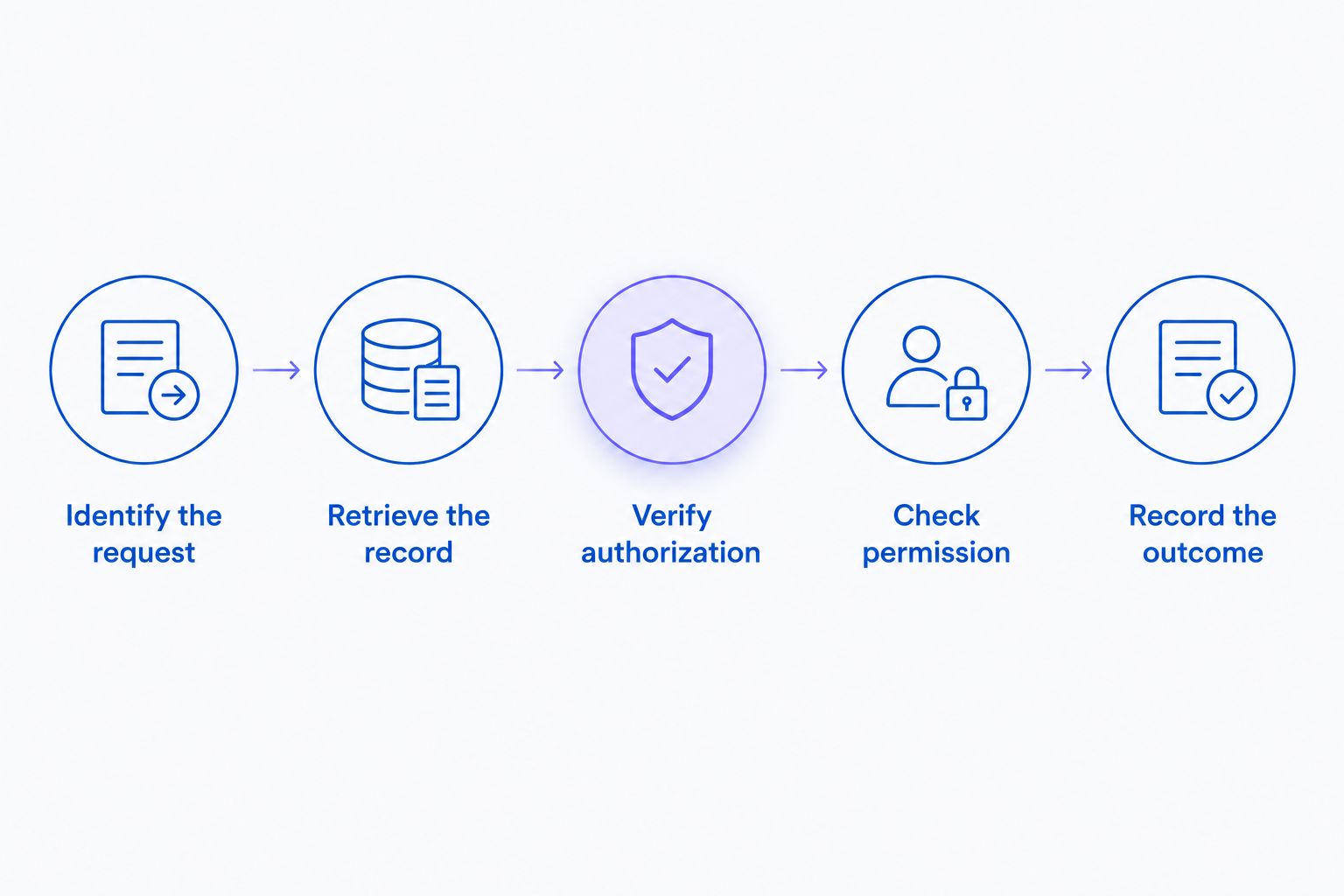
Verify authorization before granting permission to change an order.
A complete workflow needs an exit for uncertainty. If verification cannot finish, tell the customer how to continue through an approved support route without revealing protected information or promising an unapproved action.
Why fraud-screening capability varies
The label “AI phone agent” does not describe a standard set of security controls. Assess these factors when choosing or configuring your 2026 workflow:
- Order access: Confirm which records the agent can retrieve and whether the information is current enough for the requested action.
- Verification method: Establish what evidence authorizes a caller, rather than accepting order knowledge as proof.
- Action permissions: Separate read access from permission to refund, cancel, replace, or change delivery details.
- Exception rules: Specify which requests stop automation and require an authorized reviewer.
- Review records: Check whether staff can reconstruct the verification decision and any resulting order change.
- Failure handling: Define what happens when a lookup, verification step, or handoff fails.
Choose controls you can demonstrate in a test call. A written assurance that a system is secure does not answer whether it blocks the particular unauthorized action your store needs to prevent.
Which order requests deserve closer review?
Use the requested action to decide what evidence is necessary. Do not label a customer fraudulent because they are upset, speak differently from your team, or struggle to recall purchase details.
Refund destination changes
A caller asking you to send a refund somewhere other than the approved destination is requesting a policy-sensitive exception. Require authorized review rather than accepting a new destination solely because the caller supplies it confidently.
Keep the conversation focused on the approved refund process. Do not disclose payment details to help an unverified caller complete their story.
Delivery changes
Treat a request to redirect goods separately from a tracking question. Check authorization and fulfillment restrictions before approving any address change.
A caller's explanation can help staff understand the request, but it should not bypass the required checks. If the change cannot be verified or executed within policy, pause it.
Duplicate remedies
Before approving another refund or replacement, review the recorded outcome of previous requests. An earlier remedy changes what your team needs to investigate.
Describe the issue neutrally. A repeated request can result from confusion or an unresolved problem, so the record should state what happened without assigning an unsupported motive.
Requests to bypass verification
A request to skip verification should leave the verification requirement in place. Offer an approved alternative route instead of negotiating away the control.
The same rule should apply during busy periods and outside staffed hours. Otherwise, your support policy changes according to when someone calls.
Where Avasales fits in a Shopify support workflow
Avasales is best suited to Shopify merchants seeking voice support and outbound abandoned-cart recovery. Its stated capabilities include answering customer support calls 24/7, resolving orders and refunds, and making outbound calls to recover abandoned carts.
That support coverage is useful for merchants who need customers to reach a phone agent beyond their staffed schedule. The evaluation limit is equally important: order and refund handling should not be treated as proof of dedicated fraud detection.
Before enabling sensitive actions, ask Avasales to demonstrate the verification and permission controls relevant to your store. Confirm which checks are available, which require another system, and which requests need a human decision.
For a 2026 rollout, begin with the least-sensitive permitted actions. Expand authority only after your test calls show that unsuccessful verification prevents the restricted action, including when the caller insists on an exception.
How should you test an agent before enabling refunds?
Run at least 5 scripted test calls as an initial acceptance checklist. This is a recommended minimum exercise, not evidence of detection accuracy or a substitute for ongoing review.
- Routine tracking: A customer requests an update without asking to change the order. Check that the response stays within your information-disclosure policy.
- Authorized refund: A customer completes your verification process and requests a refund allowed by store policy. Check the resulting action and record.
- Failed verification: A caller provides purchase details but cannot complete the required verification. Confirm that the sensitive action stops.
- Changed destination: A caller asks for a refund or delivery change involving newly supplied details. Confirm that the request follows the exception process.
- Unavailable records: The order lookup or required check cannot complete. Confirm that the agent pauses rather than inventing an answer or executing the change.
Judge each call against the intended outcome. A smooth conversation is not a passing result if the agent reveals protected information or performs an unauthorized action.
Repeat relevant tests whenever you change permissions, refund rules, or connected systems. Preserve the expected result with each script so staff can recognize a regression rather than relying on memory.
Can an AI phone agent prove that a caller is fraudulent?
No. An AI phone agent can identify failed checks or policy conflicts, but those observations do not establish a caller's intent. Record the evidence and route the request appropriately without accusing the customer.
Does knowing an order number prove ownership?
No. An order number identifies a transaction; it does not independently establish that the caller is authorized to change it. Require your approved verification process before allowing sensitive actions.
Should suspicious callers always be blocked?
No. Pause the sensitive action and offer a legitimate path to verification or review. A failed check should protect the order without preventing an authorized customer from resolving the issue later.
FAQ
Can AI phone agents detect fraud on Shopify support calls?
AI phone agents can flag potential fraud signals when a configured workflow checks order records, verifies authorization, and applies action rules. A flag is a reason to review a request, not proof of fraud.
Can a phone agent tell whether someone is lying from their voice?
Do not use voice confidence, tone, or fluency as proof of identity or dishonesty. Base sensitive order decisions on approved verification and recorded evidence.
Should an AI agent issue a refund when the caller knows the order details?
Knowing order details alone should not authorize a refund. Require the store's approved verification process and confirm that the requested refund falls within policy.
What should happen if the caller fails verification?
Stop the sensitive action and offer an approved route to continue verification or request human review. Avoid disclosing protected order information while explaining the next step.
Does around-the-clock phone support mean around-the-clock refund approval?
No. A phone agent can receive requests outside staffed hours while sensitive actions remain subject to verification, permissions, and reviewer availability.
Does Avasales replace a dedicated fraud-prevention system?
Evaluate Avasales as Shopify voice support and abandoned-cart recovery software, not as a replacement for dedicated fraud controls. Confirm the specific verification and authorization capabilities required for your order workflow.
What should a store test before enabling automated order changes in 2026?
Test authorized requests, failed verification, destination changes, duplicate remedies, and unavailable records. Confirm that every unsuccessful required check prevents the restricted action and leaves a useful review record.
One last thing
Test what the agent refuses to do before measuring how quickly it resolves calls. A fast refund is not a successful outcome when the caller lacked authorization. Start your 2026 review with a deliberately failed verification attempt and confirm that the order remains unchanged.